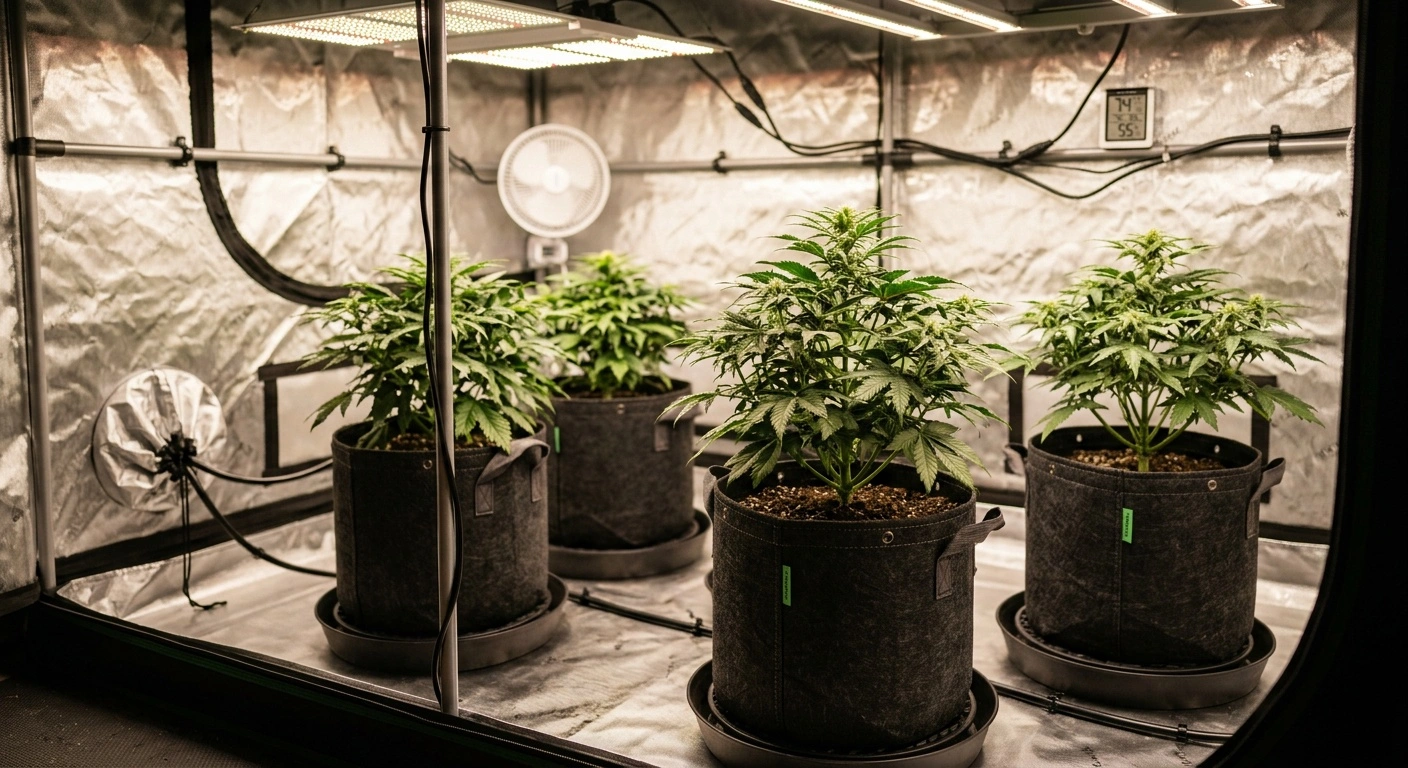
Cannabis grow bags give roots more oxygen and help prevent circling growth in container gardens. Their porous fabric also improves drainage, but plants may need more frequent watering than they would in plastic pots.
Choosing the right size, material, and growing medium can make daily plant care more predictable. Before growing cannabis, check local laws and follow all cultivation limits.
How Cannabis Grow Bags Support Root Development
Roots often circle the inside wall of a rigid plastic container. Fabric bags expose root tips to air as they reach the container edge. The tips stop extending, which encourages branching farther back along the root system.
This process, often called air pruning, can create a dense network of fine roots. Those roots help the plant absorb water and nutrients throughout the growing medium. However, a fabric container cannot correct poor irrigation, compacted soil, or improper feeding.
Porous walls also allow more gas exchange than solid plastic. Roots need oxygen for normal respiration, especially after watering. A loose medium and open drainage path remain essential.
Choosing the Right Bag Size
Container size affects watering frequency, plant size, and available root space. Small bags dry quickly and can restrict large plants. Oversized bags hold more medium, cost more to fill, and may stay wet longer in cool conditions.
- 1 to 3 gallons: Suitable for seedlings, clones, small plants, or short indoor cycles.
- 5 gallons: A common indoor size that balances root space with manageable watering.
- 7 to 10 gallons: Useful for larger indoor plants or medium-sized outdoor plants.
- 15 gallons and larger: Better suited to long outdoor seasons and plants with extended vegetative growth.
These ranges offer starting points rather than fixed rules. Climate, cultivar, training method, and growing medium all affect the plant’s needs. Available floor space also matters indoors.
Consider the Container’s Shape
A wide bag provides more surface area for shallow feeder roots. A tall, narrow bag fits tighter spaces but may tip when a plant develops a heavy canopy. Choose a stable shape that leaves room for airflow between plants.
Handles make containers easier to move, although wet growing media can become heavy. Lift the base as well as the handles when moving a large bag. This reduces stress on the seams.
Fabric, Plastic, and Biodegradable Materials
Most fabric bags use nonwoven polypropylene or a similar synthetic material. These bags drain freely, resist tearing, and often last for several growing cycles. Thicker fabric usually holds its shape better than thin material.
Plastic grow bags cost less and retain moisture longer. They need enough drainage holes near the bottom, and extra side holes can improve aeration. Unlike fabric, plastic does not air prune roots evenly across the container wall.
Biodegradable bags can simplify transplanting, but their durability varies. Some break down slowly and may restrict roots after planting. Check the manufacturer’s guidance before placing the entire container into soil.
Preparing the Growing Medium
A good container mix should hold moisture without becoming dense or waterlogged. Many growers use soil-based mixes, coco coir, or soilless blends. Each medium requires a different watering and feeding routine.
Perlite, pumice, or rice hulls can increase pore space in dense mixes. Avoid pressing the medium firmly into the bag. Light settling after watering will remove large air pockets without compacting the root zone.
Leave a small gap below the rim. This space keeps water and loose medium from spilling during irrigation. It also allows room for a mulch layer if the growing method calls for one.
Positioning Bags for Drainage and Airflow
Set cannabis grow bags on risers, slatted benches, or drainage trays rather than directly on a cold floor. Raising the base allows runoff to escape and helps air reach the lower fabric. Never leave a bag standing in collected runoff.
Allow space between containers so the sides can breathe. Closely packed bags retain moisture where their walls touch. That can produce uneven drying and complicate irrigation.
Outdoor growers should also consider wind exposure. A broad canopy can pull over a light container during a storm. Stakes, trellises, or heavier outer planters can provide support.
Watering Fabric Grow Bags
Fabric containers often dry from the sides as well as the top. Hot weather, strong airflow, and low humidity speed that process. Check moisture levels regularly instead of following a fixed calendar.
Lift smaller bags to judge their weight before watering. A dry container feels noticeably lighter than a fully watered one. Growers can also check the medium below the surface with a finger or moisture meter.
Apply water slowly across the container’s surface. Fast pouring can create channels that send water straight to the bottom. A second light pass often helps an overly dry medium absorb water more evenly.
Watch the plant and the root zone. Persistent drooping can result from either excess water or insufficient water, so appearance alone does not confirm the cause. Check moisture before irrigating again.
Managing Runoff and Salt Buildup
Mineral fertilizers can leave salts in the growing medium over time. Excess salts may disrupt nutrient uptake or damage root tips. Follow the nutrient manufacturer’s rates and monitor runoff when the growing method requires it.
Do not assume every plant needs routine flushing. Soil, coco, and living organic systems call for different practices. Match irrigation decisions to the medium, fertilizer program, and measured conditions.
Cleaning and Reusing Fabric Bags
Remove old roots and loose medium soon after harvest. Letting damp material sit in the bag can encourage odors and microbial growth. Shake out the container outdoors or over a collection bin.
Wash reusable bags according to the manufacturer’s instructions. A stiff brush can remove dried roots from the fabric. Rinse away cleaning products before the next use, then let each bag dry completely.
Discard containers with split seams, clogged fabric, or persistent signs of disease. Reusing damaged or contaminated bags can create avoidable problems in the next crop.
A Practical Container for Controlled Growing
Cannabis grow bags work well when growers account for their fast drainage and increased airflow. Select a size that matches the planned plant, use a loose medium, and keep the base clear of standing water.
Consistent observation matters more than a rigid schedule. Check container weight, root-zone moisture, runoff, and plant response before making changes. Those routine checks help prevent most container-related problems.