A cannabis moisture meter gives growers and processors a fast way to check flower during drying, curing, storage, and packaging. Used correctly, it can improve batch consistency and reduce the guesswork behind post-harvest decisions.
However, a meter does not replace good sampling or laboratory testing. Operators need a repeatable method, suitable equipment, and clear acceptance limits for reliable results.
What Does a Cannabis Moisture Meter Measure?
Moisture meters estimate the amount of water in a cannabis sample. Depending on the model, the device may use electrical resistance, capacitance, radio frequency, or another measurement principle.
Each technology responds differently to flower density, temperature, trichome content, and sample placement. For that reason, readings from two meter models may not match.
Some devices report moisture as a percentage. Others provide a relative scale that operators must compare against reference samples. Always confirm what the displayed number represents before setting production limits.
Moisture Content Versus Water Activity
Moisture content and water activity measure different properties. Moisture content estimates how much water the material contains, while water activity indicates how available that water is for microbial growth and chemical reactions.
Two flower samples can show similar moisture content but different water activity readings. Differences in cultivar, structure, and curing conditions can affect how tightly the plant material holds water.
Many post-harvest programs use both measurements. A moisture meter supports rapid process checks, while a water activity meter helps assess storage stability and microbial risk.
Where Moisture Testing Fits Into Post-Harvest Work
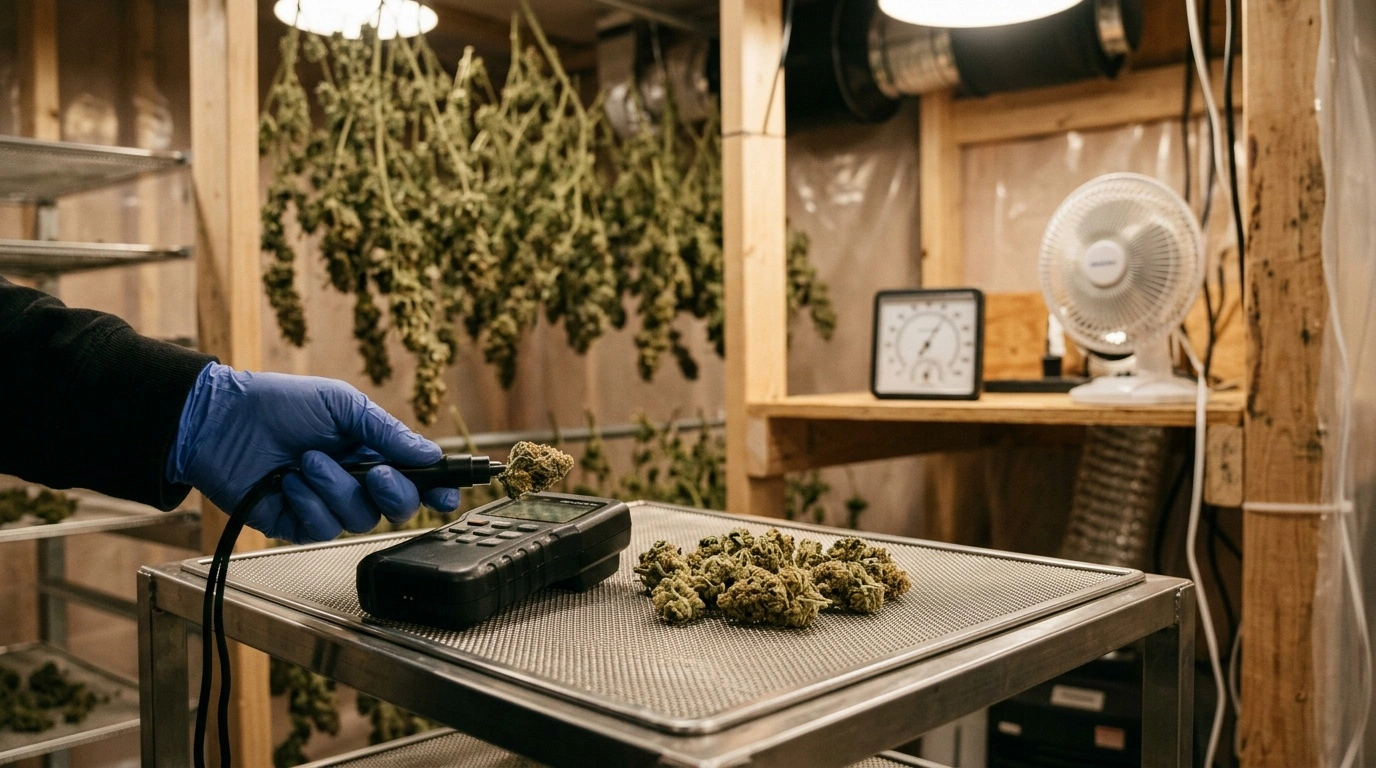
Drying rooms rarely produce perfectly uniform flower. Bud size, rack position, airflow, and initial plant moisture can create variation within the same batch.
Frequent meter checks help staff identify that variation before moving flower into curing containers. Teams can then separate wetter material, extend drying time, or adjust room conditions.
During curing, moisture can shift from the center of a bud toward its surface. A reading taken immediately after opening a container may not represent the entire lot. Let samples equilibrate under a defined procedure before making release decisions.
Storage checks can also reveal gradual changes. A rising reading may point to packaging problems, temperature swings, or uneven product conditioning.
How to Choose the Right Meter
Select a cannabis moisture meter that supports the material, sample size, and production volume in your facility. A handheld unit may suit spot checks, while a benchtop system may offer better control for routine quality testing.
Avoid assuming that a meter calibrated for wood, grain, or tobacco will produce accurate cannabis readings. The device may respond to the sample, but its displayed percentage could lack a valid relationship to cannabis moisture content.
Features Worth Checking
- Cannabis-specific calibration: Ask how the manufacturer developed and verified its calibration.
- Sample consistency: Confirm how much material the meter requires and how staff should prepare it.
- Temperature compensation: Look for guidance on room and sample temperature.
- Measurement range: Make sure the range covers flower at each stage of your process.
- Repeatability: Review performance data and test the unit with duplicate samples.
- Data handling: Consider time stamps, batch records, exports, and user identification.
- Cleaning requirements: Choose surfaces and sample chambers that staff can clean without damaging sensors.
Manufacturer claims provide a starting point, not proof of performance in your facility. Compare candidate meters against your reference method before relying on them for product decisions.
How to Take More Reliable Readings
Start with a written sampling plan. Define the number of samples, their locations, bud sizes, and the testing frequency for each batch.
Collect material from several parts of the drying room or container. A single top bud cannot represent an entire harvest, especially when airflow varies across racks.
Standardize Sample Preparation
Follow the manufacturer’s directions for grinding, compressing, or leaving flower intact. Changing preparation methods can shift the reading even when the actual moisture remains constant.
Use the same sample mass whenever the device requires a fixed quantity. Also keep stems, loose leaf, and flower proportions consistent across tests.
Control Temperature and Handling
Test samples at a consistent temperature. Cold material can collect condensation, while warm material may lose moisture during handling.
Keep containers closed until testing starts. Then record the time between sample collection and measurement, especially in dry production rooms.
Take Duplicate Measurements
Run at least two readings from each sampling point when practical. If the results differ sharply, prepare a fresh sample and inspect the meter.
Large differences may indicate uneven flower, poor sensor contact, residue, or inconsistent sample loading. Do not average questionable readings without investigating the cause.
Calibration and Verification
Calibration aligns the instrument with a known reference. Verification checks whether it continues to perform within your facility’s accepted tolerance.
Follow the manufacturer’s calibration schedule, but also create an internal verification routine. Use stable check standards when available, and document every adjustment.
Periodically compare meter results with a validated reference method, such as an appropriate loss-on-drying procedure. A laboratory can help establish the relationship between quick readings and reported moisture content.
That comparison matters because heating methods may also remove volatile compounds. Your reference procedure should define temperature, time, sample preparation, and reporting basis.
Common Measurement Mistakes
- Testing only the outside of large buds
- Using a meter with no cannabis calibration
- Mixing warm and cold samples in one data set
- Ignoring residue on plates, probes, or sample cups
- Changing sample mass between readings
- Relying on one sample for a large batch
- Confusing moisture content with water activity
- Applying limits copied from another facility without validation
Teams should also avoid chasing a universal moisture percentage. Reporting methods differ, and local rules may define acceptable limits or required tests.
Set internal specifications with input from quality staff, compliance personnel, and an analytical laboratory. Then connect those limits to product stability, handling, packaging, and consumer expectations.
Build the Meter Into a Repeatable Process
A cannabis moisture meter works best as part of a documented quality system. Train staff to sample consistently, clean the device, record results, and respond to readings outside the accepted range.
Review trends by room, rack, cultivar, and batch rather than treating each number in isolation. Consistent records can reveal airflow problems, drying delays, and packaging changes before they affect a full production run.
No handheld reading can describe an entire harvest on its own. Careful sampling, routine verification, and clear operating limits turn quick measurements into useful production data.