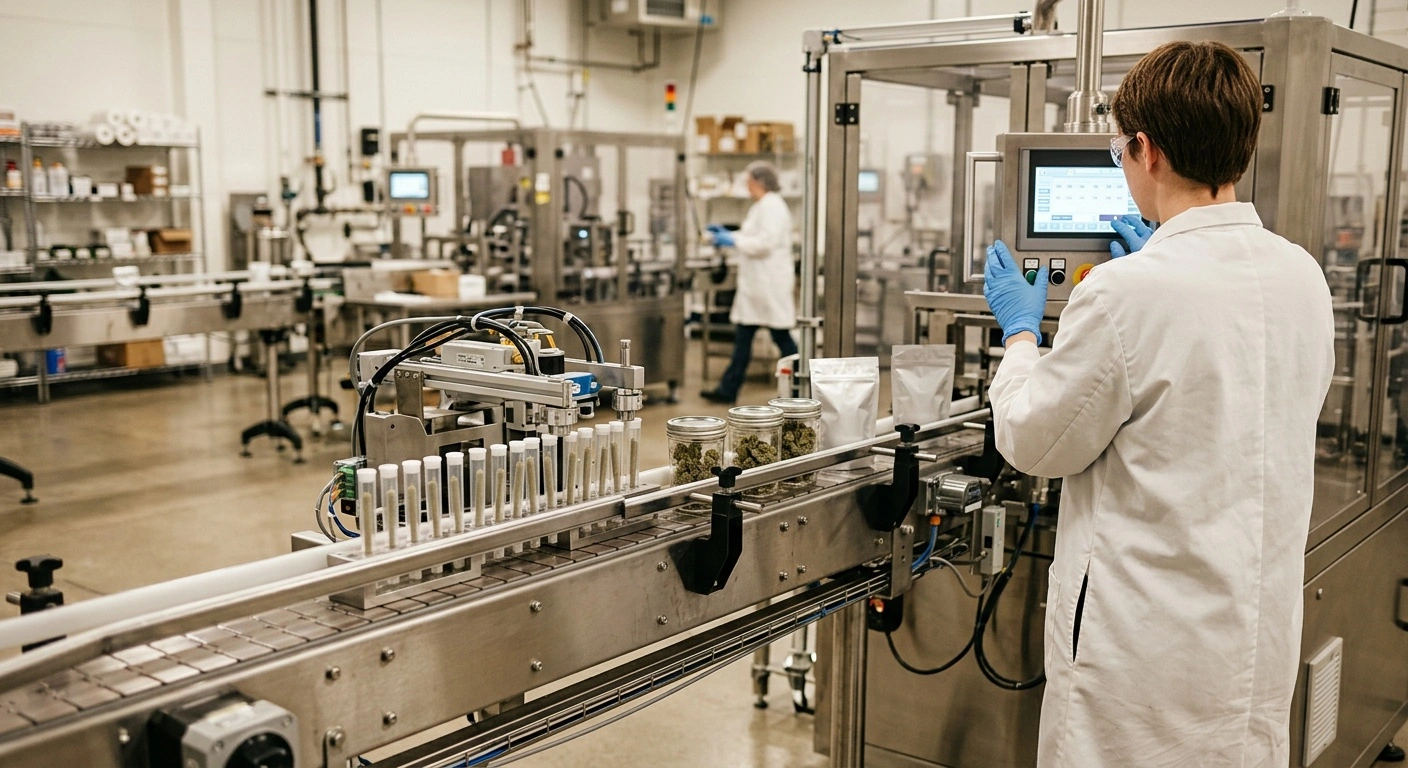
A cannabis packaging machine fills, seals, labels, or wraps cannabis products for retail sale. The right equipment improves portion accuracy, protects product quality, and reduces repetitive manual work.
Packaging needs vary across flower, pre-rolls, edibles, concentrates, and infused products. Producers should match the machine to the product, container, production volume, and local compliance rules.
How a Cannabis Packaging Machine Works
Most systems move containers through several controlled steps. Depending on the setup, a machine may weigh product, fill packages, apply closures, print labels, and verify results.
Some facilities use separate machines for each task. Others install an integrated line that connects filling, sealing, labeling, and inspection equipment.
Product Feeding and Portioning
The process begins with a hopper, conveyor, or manual loading station. Flower packaging systems often use weigh fillers that divide loose material into target portions.
Pre-roll equipment may count finished units or load them into tubes and cartons. Liquid and concentrate fillers use pumps or pistons designed for the product’s viscosity.
Container Filling
After portioning, the machine places the product into jars, pouches, bottles, tubes, or trays. Guides and sensors keep each container in the correct position.
Product characteristics affect filling accuracy. Sticky concentrates, irregular flower pieces, and fragile edibles each require different handling methods.
Sealing and Closure Application
Sealing equipment closes the package after filling. Common options include heat sealing, induction sealing, capping, zipper closing, and tamper-evident band application.
The closure must suit the container and its barrier requirements. Poor seals can expose products to oxygen, moisture, odors, or contaminants.
Common Types of Cannabis Packaging Equipment
Manufacturers sell manual, semi-automatic, and fully automatic systems. Each category fits a different labor model and production target.
Manual and Tabletop Machines
Manual equipment gives small producers more control without requiring a large capital investment. Typical tools include tabletop sealers, label dispensers, scales, and hand-operated cappers.
These machines suit limited runs and frequent package changes. However, output depends heavily on operator speed and consistency.
Semi-Automatic Systems
Semi-automatic machines handle a specific task while an operator loads or removes each package. They can improve consistency without adding a complex conveyor line.
A facility might pair a semi-automatic filler with a separate sealer and labeler. This layout also allows staff to change formats with less downtime.
Fully Automatic Packaging Lines
Automatic lines move packages through multiple stations with limited operator handling. They support higher output and provide more consistent cycle times.
These systems need stable products, standardized containers, and trained maintenance staff. They also require enough floor space for conveyors, controls, and safe access.
Key Features to Evaluate
Before buying a cannabis packaging machine, document current production data and expected growth. Use actual package sizes, shift lengths, changeover times, and reject rates.
Fill Accuracy and Product Loss
Accurate filling protects margins and helps producers meet declared net quantity requirements. Ask suppliers to test the machine with your real product and packaging materials.
Track average fill weight, variation, giveaway, and product damage during the test. A fast machine offers little value if it creates excess waste.
Production Speed
Suppliers often publish maximum cycle rates under controlled conditions. Actual output may drop during loading, cleaning, label changes, or product adjustments.
Measure speed across a complete shift rather than a short demonstration. This approach gives a more useful estimate of daily capacity.
Changeover and Cleaning
Many cannabis producers package several products on one line. Tool-free adjustments and stored recipes can shorten changeovers between containers or fill sizes.
Operators also need access to product-contact parts. Removable hoppers, smooth surfaces, and clear cleaning instructions reduce sanitation time.
Controls and Data Collection
Modern machines may store operating recipes, reject counts, weights, and downtime records. This data helps supervisors find recurring faults and compare production runs.
Confirm that any software works with existing systems. Also review user permissions, backup procedures, and technical support before installation.
Packaging Materials and Compliance
Cannabis packaging rules differ by product type and jurisdiction. Requirements may cover child resistance, tamper evidence, opacity, warning symbols, labels, and traceability.
Producers should confirm current rules with qualified legal or compliance professionals. Equipment suppliers can explain machine compatibility, but they should not replace regulatory advice.
Package Compatibility
Container dimensions can vary even within the same stated size. Small differences may affect guides, sealing pressure, cap torque, and label placement.
Run samples from the intended packaging supplier before approving equipment. Include every cap, liner, pouch film, label stock, and tamper-evident component in the trial.
Labeling and Coding
Labelers must place labels consistently on the chosen package shape. Printers may add lot numbers, dates, barcodes, or other required information.
Vision systems can check label presence, position, and readable codes. Facilities should define a clear process for rejected packages and production records.
Installation and Daily Operation
Plan utilities and workflow before the machine arrives. Check electrical service, compressed air, network access, ventilation, and available floor space.
Leave room for cleaning and maintenance. Operators should also reach emergency stops without crossing moving equipment.
Training and Maintenance
Operator training should cover startup, shutdown, changeovers, cleaning, fault recovery, and safety procedures. Maintenance staff need separate instruction on adjustments and component replacement.
A preventive maintenance schedule reduces unexpected stoppages. Keep common wear parts on site, including belts, seals, sensors, blades, and heating elements.
Testing Before Full Production
Complete an acceptance test with representative products and packaging. Record fill accuracy, seal quality, label placement, output, waste, and changeover time.
Start with controlled production runs after installation. Increase speed only after operators can maintain quality and correct faults safely.
Choosing Equipment That Fits the Operation
The best system matches the facility’s real production demands. It should handle current products while allowing reasonable changes in package size or output.
Compare suppliers on testing, training, parts availability, service response, and documented performance. Purchase price matters, but downtime and product loss also affect total operating cost.
A well-specified cannabis packaging machine can improve consistency without creating unnecessary complexity. Base the decision on measured production needs, package trials, and reliable technical support.