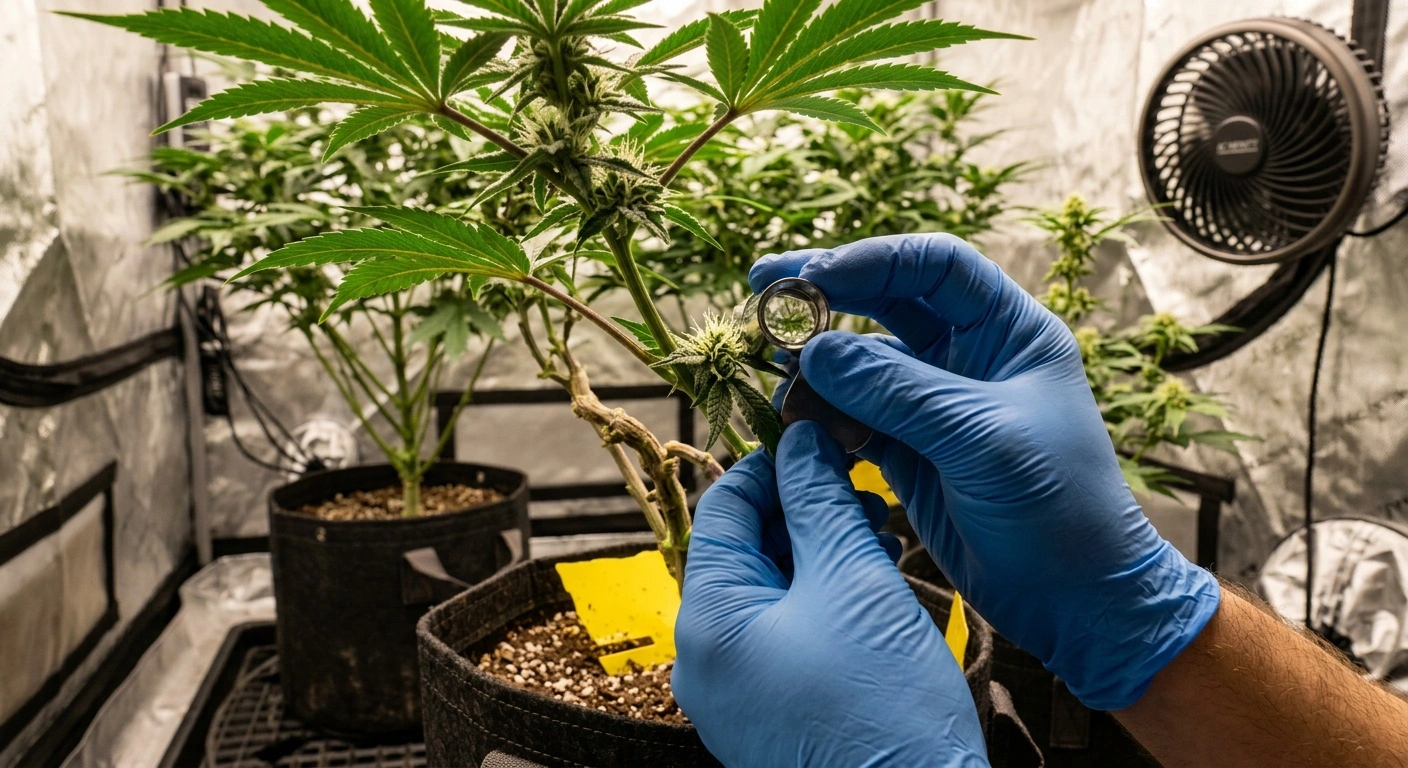
A cannabis sex test helps legal home growers identify male, female, or intersex plants before pollen compromises a crop. This guide applies to adults who may legally grow cannabis at home. Check state and local rules for plant limits, registration, security, and visibility before germinating seeds.
Growers who want seedless flower usually retain female plants and remove males. Fertilized female flowers redirect resources toward seed production. Visual inspection offers the most accessible identification method, while laboratory testing can detect genetic markers before flowers appear.
Neither method replaces regular observation. Genetics, stress, and environmental problems can cause a plant to develop both male and female reproductive structures later.
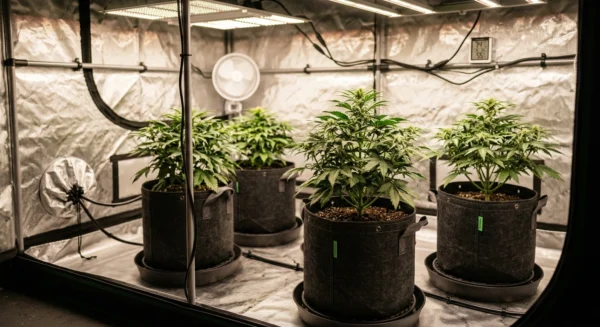
Healthy growth also makes reproductive structures easier to identify. Heat, irregular light periods, pests, root problems, and severe pruning can delay or distort development. Stable temperature, humidity, airflow, and lighting support normal growth while reducing mold risk.
How Cannabis Plants Express Sex
Botanists commonly describe cannabis as dioecious. This means individual plants usually develop mainly male or female reproductive structures. Female plants form bracts and flowers, while males produce pollen sacs.
Some plants develop both types of reproductive structures. Growers often call this intersex expression or hermaphroditism.
Do not judge sex from overall plant shape. Male plants may grow taller or develop wider spacing in some gardens, but these traits remain unreliable. Genetics, container size, nutrition, light intensity, and competition also affect plant structure.
The most useful visual signs appear at the nodes. A node is the point where a branch or leaf stem meets the main stalk. Early reproductive structures at these locations are called pre-flowers.
Pre-flowers appear as the plant matures, but timing varies. Do not remove a plant based on its age alone.
Photoperiod plants develop flowers in response to maturity and changes in the light cycle. Autoflowering plants rely more on age and genetics, so growers may have less time to inspect them. In either case, use a magnifier and check several upper and middle nodes.
Choosing a Cannabis Sex Test
Choose a method based on how soon you need an answer, the number of plants, and the cost of an error. Visual inspection costs little and requires no outside service. However, it cannot provide a reliable answer until reproductive tissue appears.
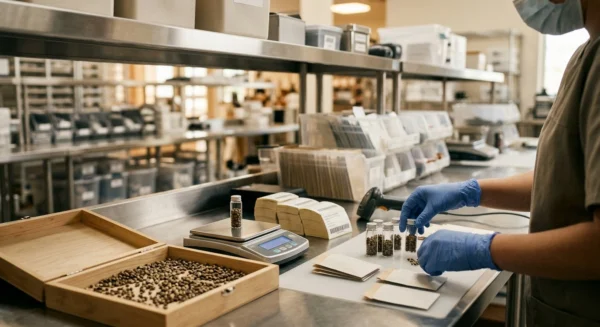
A laboratory can test a small leaf sample during early vegetative growth. Its assay usually looks for genetic markers associated with male plants. Sample requirements, prices, and turnaround times vary by provider.
Early testing can save space, electricity, soil, and labor. However, a female-associated result does not guarantee that the plant will never develop intersex flowers.
Feminized seeds reduce the likelihood of ordinary male plants, but growers should still inspect them. Labeling errors, pollen contamination, unstable genetics, or stress can produce unexpected results. Clones usually retain the donor plant’s genetic sex, yet stress can still trigger male reproductive structures.
Do not treat smartphone image applications as definitive identification tools. Poor image quality, immature tissue, and overlapping plant parts can lead to errors. If the evidence remains unclear, isolate the plant and inspect it again later.
| Method | When it helps | Main advantage | Main limitation |
|---|---|---|---|
| Visual pre-flower inspection | After reproductive structures begin to develop | Costs little and requires no laboratory | Early inspections often remain uncertain |
| Laboratory genetic testing | During early vegetative growth, depending on the provider | Detects male-associated markers before visible flowering | Requires accurate sampling and a suitable laboratory |
| Observation after flowering starts | During the early flowering transition | Makes reproductive structures easier to distinguish | A missed male may release pollen |
| Seed or clone history | Before and throughout the grow | Provides useful information about expected sex | Cannot replace inspection of the living plant |
Tools and Supplies
- Clean magnifier: Use a hand lens or loupe to inspect small structures at the nodes.
- Plant labels: Give each plant a unique identifier. Keep it attached through sampling, transplanting, and flowering.
- Grow log: Record dates, observations, photographs, test results, and environmental problems.
- Sterile cutting tool: Use clean scissors only when a laboratory requests a leaf sample. Follow its collection instructions.
- Disposable gloves: Gloves protect samples and help prevent pest transfer between plants.
- Approved sample packaging: Use the packaging and labeling system specified by the laboratory.
- Separate holding area: If local rules and space allow, isolate plants with uncertain or male structures.
- Thermometer and hygrometer: Monitor heat and humidity that could stress plants or encourage disease.
- Safe lighting and ventilation: Use rated equipment, secure wiring, and enough ventilation to remove heat and moisture.
How to Identify Cannabis Plant Sex
- Label every plant. Assign a unique number or name when each seedling or rooted clone enters the growing area. If you use a laboratory cannabis sex test, match the plant label to the sample identifier exactly. Success cue: Every note, photograph, and result points to one specific plant.
- Wait for suitable tissue. For visual identification, wait until small pre-flowers appear at the nodes. For laboratory testing, follow the provider’s requirements for plant age, leaf size, and tissue type. Success cue: The structures are clear enough to inspect, or the sample meets the laboratory’s published standards.
- Inspect several nodes under good light. Start at established upper and middle nodes. Rotate the plant or change your viewing angle instead of pulling at tender growth. Success cue: You can see individual structures rather than relying on plant height or shape.
- Look for female pre-flowers. A female pre-flower often looks like a small, pointed or teardrop-shaped bract close to the node. Fine stigma hairs may emerge as it develops. Success cue: Similar structures appear at several nodes, and recognizable stigmas develop over time.
- Look for male pollen sacs. Early male structures usually appear smooth and rounded, often on short stems. They form groups as flowering advances. Success cue: Several rounded structures develop without stigmas and begin forming a cluster.
- Distinguish pre-flowers from stipules. Stipules are narrow, pointed structures found at nodes on both male and female plants. They do not identify plant sex. Success cue: You base the decision on reproductive tissue rather than a single pointed structure.
- Check for both flower types. Inspect confirmed females throughout flowering, including the lower and inner canopy. Intersex growth may appear as pollen sacs or exposed yellow anthers. Success cue: You find unexpected structures before they open and release pollen.
- Collect laboratory samples carefully. Wash your hands, wear clean gloves, and sanitize the cutting tool. Take only the tissue requested by the provider, and keep samples separate. Success cue: The laboratory accepts the correctly labeled sample without reporting contamination or handling problems.
- Record the result accurately. Mark each plant as visually female, visually male, female-associated, male-associated, or uncertain. Keep the original report and record each inspection date. Success cue: You can manage confirmed plants while keeping uncertain plants flagged for review.
- Separate pollen-producing plants. If you want seedless flower, move suspected males away from females without brushing them against the canopy. Continue following local plant-count and secure-cultivation rules. Success cue: No opening pollen sacs remain in the female flowering area.
- Inspect weekly through flowering. Check more often after heat events, pest outbreaks, light interruptions, transplant stress, or root problems. An earlier result cannot predict every later change. Success cue: You identify new structures while they remain closed and localized.
Female, Male, and Intersex Structures
Female pre-flowers
Female pre-flowers grow close to the node and usually have a pointed, bract-like shape. As they mature, one or more pale stigmas may extend from the bract. These stigmas receive pollen and are not roots or mold.
New vegetative shoots can resemble female pre-flowers because both may look pointed. Inspect several nodes and allow uncertain tissue to develop. Remember that stipules appear on plants of either sex.
Male pollen sacs
Male pre-flowers begin as rounded structures without threadlike stigmas. They may appear alone at first, then form clusters. Mature sacs eventually hang downward and open.
Do not make an irreversible decision based on one round bump. Axillary buds, swollen tissue, and image distortion can resemble immature pollen sacs. Confirm the pattern at several nodes or use laboratory testing.
Intersex expression
Intersex plants develop male and female reproductive structures on the same plant. Separate pollen sacs may grow among female flowers. In other cases, narrow yellow anthers emerge directly from a flower.
Growers often call exposed anthers “bananas,” although their color and shape vary. Unlike a closed pollen sac, an exposed anther may release pollen quickly.
Genetics can contribute to intersex expression, and environmental stress may trigger it. Common stressors include severe heat, inconsistent lighting, root damage, pest pressure, and abrupt environmental changes. Stable conditions reduce avoidable stress and make unusual growth easier to detect.
How the Growing Environment Affects Identification
Plants show reproductive features most clearly during steady growth. Weak lighting can cause stretched growth, while excessive heat or light can damage new tissue. Both problems make small structures harder to read.
Keep the dark period consistent for flowering photoperiod plants. Light leaks or irregular schedules can disrupt normal development. Use a timer and check the growing area for unintended light.
Air should move gently through and above the canopy. Stagnant air traps humidity inside dense foliage and increases the risk of powdery mildew or flower rot. Strong, direct airflow can damage tender growth and spread pests or pollen.
Monitor temperature and relative humidity with suitable instruments. High humidity encourages fungal disease, while very dry conditions can increase stress and pest pressure. Do not judge the room by personal comfort alone.
Grow lights, heaters, fans, and dehumidifiers create heat and electrical demand. Never overload circuits or place electrical connections near irrigation water. Ask a licensed electrician to assess the setup if you do not know the circuit capacity.
Troubleshooting a Cannabis Sex Test
-
Problem: Every plant appears female very early.
Likely cause: You may be mistaking stipules or new shoots for female pre-flowers.
Fix: Wait for clearer reproductive tissue. Inspect several nodes with magnification or use a qualified laboratory. -
Problem: A laboratory result conflicts with later growth.
Likely cause: Someone may have mislabeled, contaminated, or switched the sample. The plant may also be showing intersex expression.
Fix: Check the plant and sample identifiers. Contact the laboratory and inspect the whole plant for both flower types. -
Problem: A suspected male remains ambiguous.
Likely cause: The structure may be immature, damaged, or hidden by leaves.
Fix: Isolate the plant when practical. Photograph the same node for several days and compare multiple sites. -
Problem: Pollen sacs appear on a plant previously identified as female.
Likely cause: Genetics or stress may have triggered intersex expression.
Fix: Separate the affected plant, inspect nearby plants, and correct heat, lighting, pest, or root problems. -
Problem: White or gray material resembles female stigmas.
Likely cause: Powdery mildew, pest residue, or damaged tissue can resemble pale flower growth.
Fix: Examine the area under magnification and isolate affected plants. Use only controls approved for cannabis in your jurisdiction. -
Problem: Insects or webbing block the nodes.
Likely cause: Mites, thrips, aphids, or other pests may be established in dense foliage.
Fix: Quarantine affected plants and clean tools between uses. Follow a lawful integrated pest management plan. -
Problem: Plants develop slowly and show no clear pre-flowers.
Likely cause: Root problems, weak light, low temperatures, nutrient imbalance, or repeated stress may delay maturity.
Fix: Review the environment and root zone. Make gradual corrections instead of diagnosing immature tissue. -
Problem: Mold develops in dense flowers.
Likely cause: Excess humidity, poor air exchange, crowding, or dead plant material can create moist pockets.
Fix: Remove affected material carefully and sanitize tools. Improve spacing and ventilation, and never consume visibly moldy cannabis.
Managing Results Within the Law
A sex result does not change how local law counts a plant. Some jurisdictions classify seedlings, clones, immature plants, and flowering plants differently. Male plants may still count toward the household limit.
Review current statutes and guidance from your state cannabis regulator before keeping extra seedlings for selection. Local ordinances, lease terms, and homeowners association rules may add restrictions.
Many home-grow laws require locked plants that remain outside public view. Moving a suspected male to a porch, yard, shed, or different room could violate those rules. Confirm that the new location qualifies before moving the plant.
Do not sell or transfer plants, pollen, seeds, or harvested cannabis unless local law expressly permits it. Transporting cannabis across state lines remains federally illegal. This applies even between states that permit adult-use cannabis.
Cannabis also remains illegal on federal land. Federal firearm restrictions may apply to cannabis users, including registered medical patients, while courts continue to review related challenges. Consult a qualified attorney for advice about your circumstances.
Keep cultivation equipment and harvested cannabis away from children and pets. Store finished products in locked, clearly labeled containers. Driving while impaired remains illegal, and employers may enforce workplace drug policies.
What to Do After Identifying Your Plants
Update the grow log and compare the active plant count with local limits. Growers seeking seedless flower usually remove or securely separate males before their pollen sacs open. Breeders may retain selected males in controlled spaces where the law allows it.
Pollen travels through air and can cling to clothing, tools, and hands. Handle pollen-producing plants last, then clean tools and change clothing before returning to female plants.
Continue inspecting retained females throughout flowering. Look inside the canopy and around developing flower sites, especially after environmental stress. An early cannabis sex test does not replace these visual checks.
Maintain consistent light periods, moderate temperatures, clean tools, and steady airflow. Avoid severe pruning or abrupt environmental changes unless plant health requires them. Healthy plants remain easier to inspect and less vulnerable to disease.
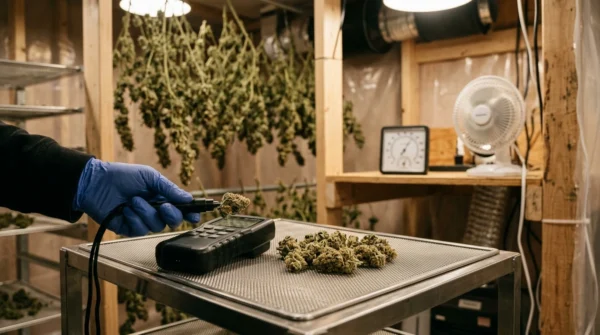
At harvest, check flowers for mold, insects, and immature seeds before drying. Many growers use conditions near 60°F and 60 percent relative humidity as general drying guidance. Monitor the crop and room instead of relying on one fixed target.
Do not consume cannabis that smells musty or shows visible fungal growth. When in doubt, discard affected material rather than trying to trim away the mold.
Reliable identification depends on clear labels, repeated observations, and accurate records. Visual inspection works well for many small legal gardens, while laboratory testing can save time and growing space. Judge each plant by reproductive structures, not height, leaf shape, or one unclear node.