Ghost cannabis extracts is a name adults may see on concentrates, vape products, or hemp-derived cannabinoid products. However, the name does not identify one manufacturer, product line, or state-regulated catalog. Shoppers must evaluate potency and purity by product type, jurisdiction, batch number, and certificate of analysis.
This review does not cover a specific package, state market, license number, or laboratory report. Therefore, exact potency, ingredients, prices, strains, and availability remain unverified. Similar names may also represent unrelated businesses that follow different licensing and testing rules.
This guide helps adults evaluate a Ghost-branded product at a licensed retailer. It explains what the package and laboratory record can confirm. It does not include hands-on testing or score an unidentified batch for flavor, effects, or performance.
What the Ghost name tells you
A cannabis brand name does not prove state licensure, potency, or contaminant testing. States regulate their own legal cannabis markets. Licensed manufacturers usually identify themselves through package details, tracking information, or a license number.
Start by identifying the business that manufactured or distributed the item. Then check the retail source. A state-licensed dispensary should carry products that regulators can trace through the local supply chain.
Testing requirements differ by state, so licensed products do not follow one national standard. Products from informal sellers, unlicensed websites, smoke shops, or social media may lack required marijuana testing. Those sales may also fall outside a state’s regulated cannabis system.
Licensure does not guarantee a flawless product, and an unregulated product is not automatically contaminated. Still, regulation gives authorities tools to trace batches, investigate complaints, and issue recalls. Treat the brand name as an identification clue, not proof of quality.
Why the state and manufacturer matter
A state cannabis license generally does not permit nationwide marijuana sales. Different licensees may produce similar branding in separate states. As a result, formulas, extraction methods, hardware, testing panels, and availability can vary.
Find the legal manufacturer’s name and applicable license information before buying. Compare those details with the state cannabis regulator’s database. Do not rely only on a QR code or promotional website.
A useful QR code should open a report for the exact product and batch. The product name, lot number, package identifiers, and laboratory report should match. Conflicting or missing details give you a reason to pause.
Ask the retailer to explain any discrepancy. Choose a different product if the retailer cannot identify the manufacturer or provide the required batch record.
Ghost Cannabis Extracts product line overview
The brand name alone does not establish a unified, current product catalog. A reliable catalog requires a named licensee and state market. Without those details, claims about strains, cartridges, disposable devices, or concentrates may mislead shoppers.
Online menus can become outdated or copy information from another retailer. They may also refer to an unrelated business with a similar name. Confirm the actual product through its package and the licensed retailer’s inventory record.
The table describes extract categories commonly sold in legal cannabis markets. It does not confirm that this brand sells every listed category. Check terms such as “live,” “resin,” “rosin,” “diamonds,” and “full spectrum” against the ingredients and local labeling rules.
| Product form | What it generally is | What to verify |
|---|---|---|
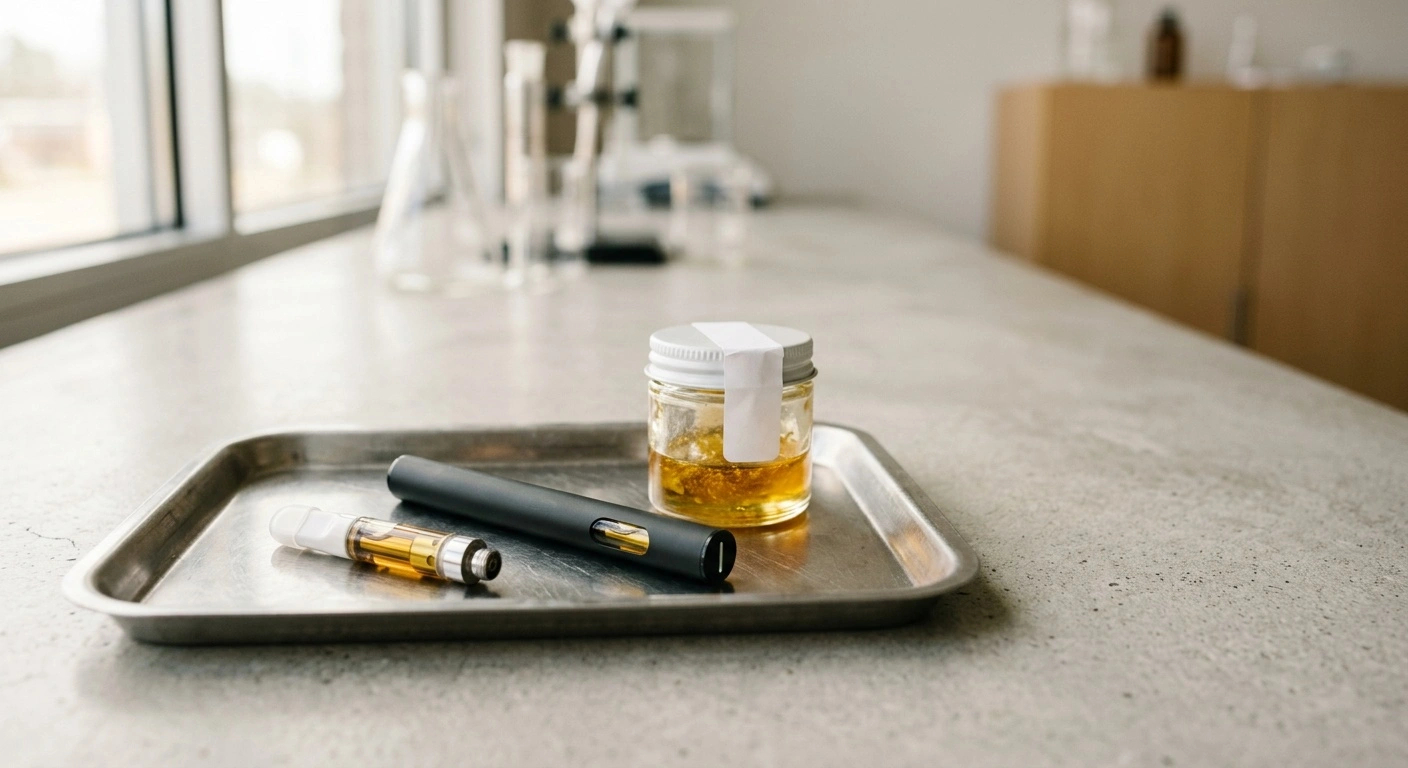
| Vape cartridge | Cannabis extract in a cartridge designed for compatible battery hardware | Ingredients, compatibility, batch number, testing date, and licensed manufacturer |
| Disposable vape | A prefilled extract reservoir with a battery and heating element | Ingredients, device condition, authenticity, storage guidance, and disposal instructions |
| Live resin | An extract marketed as retaining compounds from fresh or frozen cannabis | Extraction category, added ingredients, cannabinoid results, and contaminant testing |
| Rosin | A concentrate made with heat and pressure rather than hydrocarbon solvents | Source material, storage instructions, microbial results, and whether the product is genuine rosin |
| Distillate | A refined cannabinoid oil that may contain terpenes or other permitted ingredients | Complete ingredients, cannabinoid source, potency, additives, and residual-solvent results |
| Hemp-derived intoxicating product | A cannabinoid product marketed under hemp laws instead of a state marijuana program | Current legality, cannabinoid identity, conversion byproducts, laboratory credentials, and retailer authorization |
How product form affects use
Extracts usually contain more cannabinoids by volume than cannabis flower. A higher percentage does not automatically indicate better quality. Cannabinoid composition, terpene content, consistency, storage, and hardware can all affect the experience.
Vape oil must suit the device’s heating element and airflow system. A poor match can cause clogging, leaking, harsh vapor, or uneven output. These problems do not prove contamination, but they can make the device unreliable.
Dabbable concentrates require equipment designed for that product form. They can produce rapid and pronounced effects. Ingestible oils act differently and should not replace inhaled concentrates unless the label specifically allows that use.
Follow the package directions and avoid improvised uses. Start with a small amount, wait, and assess the effect before taking more.
How to evaluate potency claims
Read potency from the batch-specific label and certificate of analysis, or COA. Do not infer strength from the word “extract.” Depending on local rules, labels may show percentages, concentrations, package totals, or state-defined servings.
These formats can confuse shoppers. Packages may list acidic cannabinoids, active cannabinoids, and calculated totals separately. Review the units carefully before comparing two products.
Laboratory measurements also include expected variation. The label and COA may differ slightly within the regulator’s permitted tolerance. Large discrepancies, unmatched batch numbers, or unsupported potency claims deserve further review.
High potency does not independently measure quality. Strong THC products may increase anxiety, disorientation, vomiting, or other unwanted effects. People with limited tolerance face a higher risk of overconsumption.
Frequent high-THC use may also increase the risk of cannabis use disorder. THC exposure has an association with psychosis risk in susceptible people. Consumers should choose potency according to their experience and intended use.
What purity means for an extract
“Pure” functions mainly as a marketing term unless the seller defines it with testing. State-required panels may cover pesticides, residual solvents, heavy metals, microorganisms, mycotoxins, and other contaminants. Test panels and passing limits vary across jurisdictions.
Residual-solvent results matter for extracts made with solvents. Rosin avoids hydrocarbon extraction, but that does not eliminate every risk. Pesticides, microbes, metals, or poor handling can still affect a rosin product.
Vape products add hardware-related concerns. The oil contacts internal materials and a heating element before inhalation. Standard cannabis tests may not fully evaluate those components.
Appearance alone cannot confirm safety. Processing, formulation, oxidation, and storage can change an oil’s color. An unexpected change in odor, separation, color, or device behavior still warrants a retailer review.
How to read the certificate of analysis
A COA should identify the laboratory, sample, product category, batch or lot, and test date. Match every identifier to the package. Do not accept a report for a different flavor or production run.
Look for results or pass designations for every test that the state requires. A generic “lab tested” statement provides little useful information. The full report should show what the laboratory tested and what it found.
Confirm that the state recognizes or licenses the laboratory when local rules require it. Many regulators publish searchable laboratory records. Accreditation information can provide additional context, but it does not replace state authorization.
Review the cannabinoid panel beside the ingredient list. Ask questions if the package promotes a cannabinoid that the report does not detect or test. The retailer should explain the difference before purchase.
Hemp-derived delta-8 THC, converted cannabinoids, and products marketed as THCA require extra scrutiny. Look for broader testing that addresses unexpected compounds and production byproducts. Federal and state oversight of these products continues to change.
Ingredients, additives, and vape hardware
The package should disclose ingredients according to the rules in its market. Cannabis oil, cannabis-derived terpenes, botanical terpenes, and other formulation ingredients are not interchangeable. Similar flavor names can hide meaningful ingredient differences.
People with allergies or sensitivities should read the full list. Avoid products with missing information or unsupported “natural” safety claims. A substance used in food is not automatically safe to inhale after heating.
Give special attention to oils, thinning agents, and flavorings that local rules do not permit for inhalation. Ask the retailer to identify every added ingredient. Choose another product if the seller cannot provide a clear answer.
A COA may reveal little about device construction because standard panels usually test the oil. Inspect the hardware for cracks, leaks, corrosion, broken seals, or opened packaging. Licensed retailers should document complaints and handle defective products under a stated policy.
Inhalation safety
Smoking and vaping cannabis usually produce effects faster than ingestion. However, intensity and duration depend on the product, dose, and consumer. Concentrates can be easy to overconsume because a small amount may contain substantial THC.
Start low and go slow. Follow state serving guidance when the package provides it. Wait long enough to assess the effect before using more.
Never use an unidentified cartridge or liquid. Do not refill or modify a disposable device unless the manufacturer designed it for that purpose. Stop using hardware that leaks, overheats, smells unusual, or produces severely harsh vapor.
Seek urgent medical care for chest pain, breathing difficulty, loss of consciousness, or other severe symptoms. No inhaled cannabis product is risk-free. People with lung or cardiovascular conditions should consult a healthcare professional before use.
Ask a pharmacist about possible interactions with prescription medicines. Avoid cannabis during pregnancy and breastfeeding.
Ingested extracts and delayed effects
An extract labeled for ingestion has a different onset than an inhaled product. Edibles and oral oils can take much longer to produce noticeable effects. Their effects may also last longer.
Do not take another serving simply because you feel nothing yet. Follow the package directions and serving information. Never treat vape oil as an edible unless the manufacturer expressly labels it for ingestion.
Medical patients should discuss product selection with a qualified healthcare professional. Brand advertising and dispensary anecdotes do not replace individualized medical guidance.
Keep cannabis locked in its original child-resistant package. Store it away from children and pets. For accidental ingestion in the United States, call Poison Control at 1-800-222-1222.
Call 911 for severe symptoms. Do not induce vomiting unless a medical professional instructs you to do so.
Storage and product condition
Heat, oxygen, light, and time can change an extract’s consistency, aroma, and cannabinoid profile. Keep the container sealed and follow its storage instructions. Cartridges, resin, rosin, and ingestible oils may require different conditions.
Do not leave vape devices in a hot vehicle or direct sunlight. Excess heat can affect the oil and battery. It may also increase leaking or device failure.
Some concentrates naturally thicken, crystallize, or separate during storage. Those changes do not always indicate spoilage. Ask the licensed retailer whether the appearance is normal for that batch.
Never add household substances or unapproved thinning agents to questionable oil. Keep the receipt and packaging until you have inspected the product. The package identifiers support returns, complaints, and recall checks.
Follow regulator instructions if authorities announce a recall. Do not try to salvage a portion that appears unaffected.
Legal and purchasing considerations
Buy marijuana extracts only through lawful channels where state law authorizes possession and sale. Adult-use markets generally restrict purchases to people aged 21 or older. Medical programs follow separate patient rules.
Possession limits, public-use restrictions, retailer licenses, and product standards vary by jurisdiction. Public consumption is generally prohibited. Driving while impaired remains illegal in every state.
Employers may test for cannabis or enforce workplace policies where state law permits. Federal firearm restrictions may also affect cannabis users, including registered medical patients. Litigation and regulatory changes continue to shape those rules.
Do not carry Ghost Cannabis Extracts or any marijuana product across state lines. This applies even when both states allow cannabis. Federal law prohibits interstate marijuana transport and possession on federal property.
Hemp-derived THC products face changing federal and state restrictions. Store availability does not prove legality. Check current rules before purchasing or traveling with any intoxicating hemp product.
Questions to ask before buying
A knowledgeable retailer should identify the manufacturer, product form, ingredients, and batch record. Staff should answer without making unsupported medical promises. They should also explain the return policy for leaking or nonfunctioning hardware.
- Who manufactured the product, and in which state does that business hold a license?
- Does the COA batch number match the package?
- Which cannabinoids and contaminants did the laboratory test?
- What ingredients did the manufacturer add after extraction?
- Does the label authorize inhalation, ingestion, or another specific use?
- Does this batch appear in any current recall or regulatory notice?
- How does the retailer handle a leaking, clogged, or defective device?
Choose a better-documented product if staff cannot answer basic traceability questions. Also reject unsupported disease-treatment claims. Dispensary extracts are not FDA-approved cures.
The FDA has approved certain cannabinoid medicines for specific uses. These include Epidiolex for certain seizure disorders and synthetic THC medications. Evidence for other therapeutic uses varies by condition, formulation, dose, and delivery method.
The practical verdict
Ghost Cannabis Extracts cannot receive a responsible blanket rating without a specific product, state, manufacturer, and batch COA. The name may help identify an item, but it does not establish its contents or supply chain. Treat reviews that omit those details with caution.
Strong verification starts with lawful retail sale and a traceable manufacturer. Matching batch identifiers, complete ingredients, and a report from an authorized laboratory add meaningful support. Marketing terms such as “premium,” “clean,” and “lab tested” do not replace records.
Choose potency that fits your tolerance and intended use. Check the exact item’s COA and confirm the manufacturer’s license through the state regulator. Never drive after using cannabis, and keep every product away from children and pets.
If the package or laboratory record leaves basic questions unanswered, select a product with clearer documentation.