Using a proper drying rack cannabis system is a crucial step in post-harvest processing. It directly influences the potency, terpene retention, flavor, and overall quality of your cannabis. Whether you grow at home or operate as a licensed cultivator, selecting the right dry rack setup and environment ensures that weeks of cultivation yield premium bud—not degraded flower. In this guide, you’ll discover the top drying rack cannabis options and get expert tips from cultivators to improve your results.
Why Your Cannabis Drying Rack Matters
Drying cannabis is fundamentally about controlling moisture. Freshly harvested plants contain up to 80% water. A well-designed drying rack cannabis system allows moisture to escape gradually while safeguarding fragile trichomes and preserving aromatic terpenes. Improper drying—whether rushed or overly slow—can ruin the flavor, invite mold, or reduce the medicinal potential of the flower.
Patients seeking relief from anxiety, pain, or insomnia—especially with terpene-rich strains like Granddaddy Purple or Super Lemon Haze—benefit from slow, controlled drying. Since terpenes are volatile and evaporate easily, a structured drying rack cannabis tool helps maintain airflow and space, minimizing loss of these essential compounds.
The ideal drying environment ranges between 60°F (15-18°C) and 45–55% humidity, with consistent airflow. Wide mesh-based racks provide excellent surface exposure. This setup prevents clumping, reduces bruising, and lowers the risk of microbial growth. Whether you’re curing two ounces or 20 pounds, investing in the right rack design makes a meaningful difference.
Top Drying Rack Cannabis Options for Every Grower
Choosing the best drying rack cannabis system depends on your operation size, space availability, and flower types. Below are popular rack styles that cater to different needs—from personal home grows to full-scale farms.
Hanging Mesh Drying Racks
- Best for: Small-scale and personal growers
- Pros: Inexpensive, stackable, space-efficient
- Cons: Can sag with heavy buds; airflow must be monitored
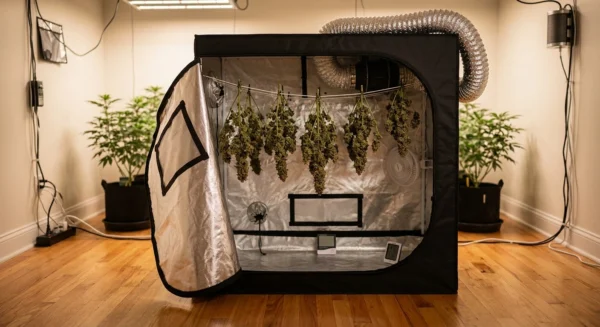
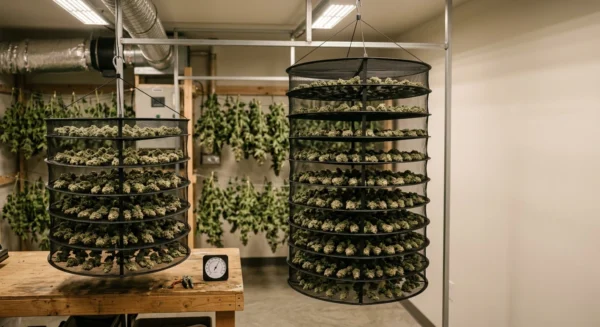
Mesh drying racks with zippered tiers—offered by brands like Dry & Mighty and iPower—are collapsible and easy to use. They hang inside tents or closets and work well with wet-trimmed buds. These racks provide even drying surfaces but require attention to airflow to avoid hotspots or uneven drying.
Wire Closet Racks or Garage Shelving
- Best for: Mid-size cultivators with indoor operations
- Pros: Sturdy; accommodates large quantities
- Cons: Bulky; not easily portable
Wire racks—like those used in commercial kitchens—can double as durable drying rack cannabis systems. Line the shelves with parchment or mesh to hold trimmed nugs, or hang full branches above the top rack. Install in controlled environments like basements or insulated garages for stable drying conditions.
Individual Bud Clips and Drying Trays
- Best for: Quality-focused hobbyists or rare strain preservation
- Pros: Preserves trichomes on delicate flowers
- Cons: Low volume; manual labor required
Flower from premium strains like Zkittlez or Runtz benefits from isolated drying. Clip-on hangers and grooved trays prevent compression and protect glandular trichomes, critical for maximizing minor cannabinoids such as CBC and CBG. Though labor-intensive, this method delivers superior results for connoisseurs.
Wall-Mounted Racks for Commercial Growers
- Best for: Licensed cultivation facilities
- Pros: High-capacity; easy to sanitize
- Cons: Permanent installation; higher upfront cost
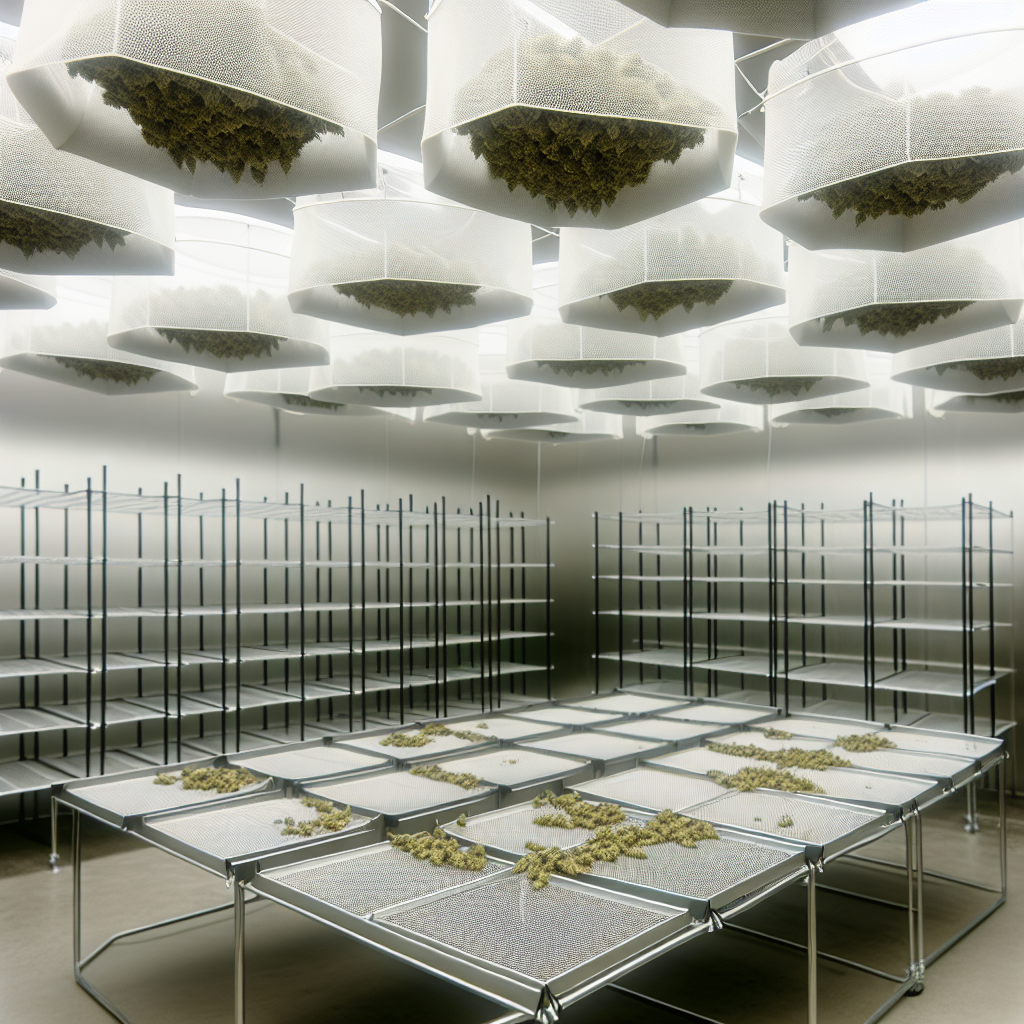
In regulated states like Oregon or Michigan, licensed producers use wall-mounted stainless steel racks in HEPA-filtered curing rooms. These racks support clean, compliant drying at scale. Operators can process thousands of grams per cycle, maintaining optimal airflow and temperature across all shelves.
How to Enhance Your Drying Rack Cannabis Results
You can drastically improve your drying rack cannabis process by adjusting environmental controls and post-harvest handling techniques—not just equipment. Apply the following professional strategies to elevate your results:
- Monitor climate conditions: Use a hygrometer/thermometer to track temperature and relative humidity. Keep the environment around 60°F with RH at 50% for balanced drying—ideal for terpene-heavy hybrids like Blue Dream.
- Indirect airflow is essential: Place fans to circulate air above and below the rack without blowing directly on buds. This prevents trichome loss and maintains moisture uniformity.
- Light exposure breaks down cannabinoids: Dry in total darkness by using a blackout tent or covering your rack. UV light significantly degrades THC and terpenes during drying.
- Daily inspections: Check buds every 24 hours. If outer layers dry fast while the core remains moist, lower airflow or boost humidity to slow the process for even results.
- Try dry trimming for dense harvests: Leave entire branches on the rack to dry before trimming. This works especially well with dense strains like Ice Cream Cake or GMO Cookies.
As a seasoned Nevada budtender explains: “Customers often blame harsh smoke on the strain, when it’s actually the dry that’s rushed or uneven. A good drying rack cannabis setup can make or break your flower.”
Drying Rack Cannabis Tips by Strain Type
Drying isn’t one-size-fits-all. Know your strain traits to fine-tune your rack and schedule. Dense indica buds—like Bubba Kush—hold internal moisture and need extra drying time. Airy sativa cultivars like Durban Poison can dry much faster, risking over-dry if not closely monitored.
High-terpene strains—such as Gelato 33, Mimosa, and Pineapple Express—require slightly cooler temps and limited airflow toward the end of the drying cycle. Keep conditions gentle to lock in flavor and enhance aroma.
Track your process in a drying journal. Weigh buds daily, note aroma changes, and record humidity shifts. This builds consistency across non-identical harvests, especially when cultivating the same strain across different seasons.
Optimize Your Drying Rack Cannabis Setup for Long-Term Success
The way you dry cannabis drastically affects every inhale—whether from a joint, pipe, or vaporizer. From first-time growers drying their six legal plants in Arizona to craft cultivators preparing boutique flower in Maine, choosing the best drying rack cannabis solution is foundational to producing high-quality bud.
Start by assessing your space and goals. Then pick a drying rack that fits both your batch size and environmental needs—be it a compact mesh tier or commercial-grade shelving. Combine patience with proper humidity control, airflow, and light management. Ultimately, every premium flower starts and ends with attention to detail. Slow, mindful drying preserves the aromas, effects, and character your strain is meant to deliver. Your tastebuds—and your future self—will thank you.