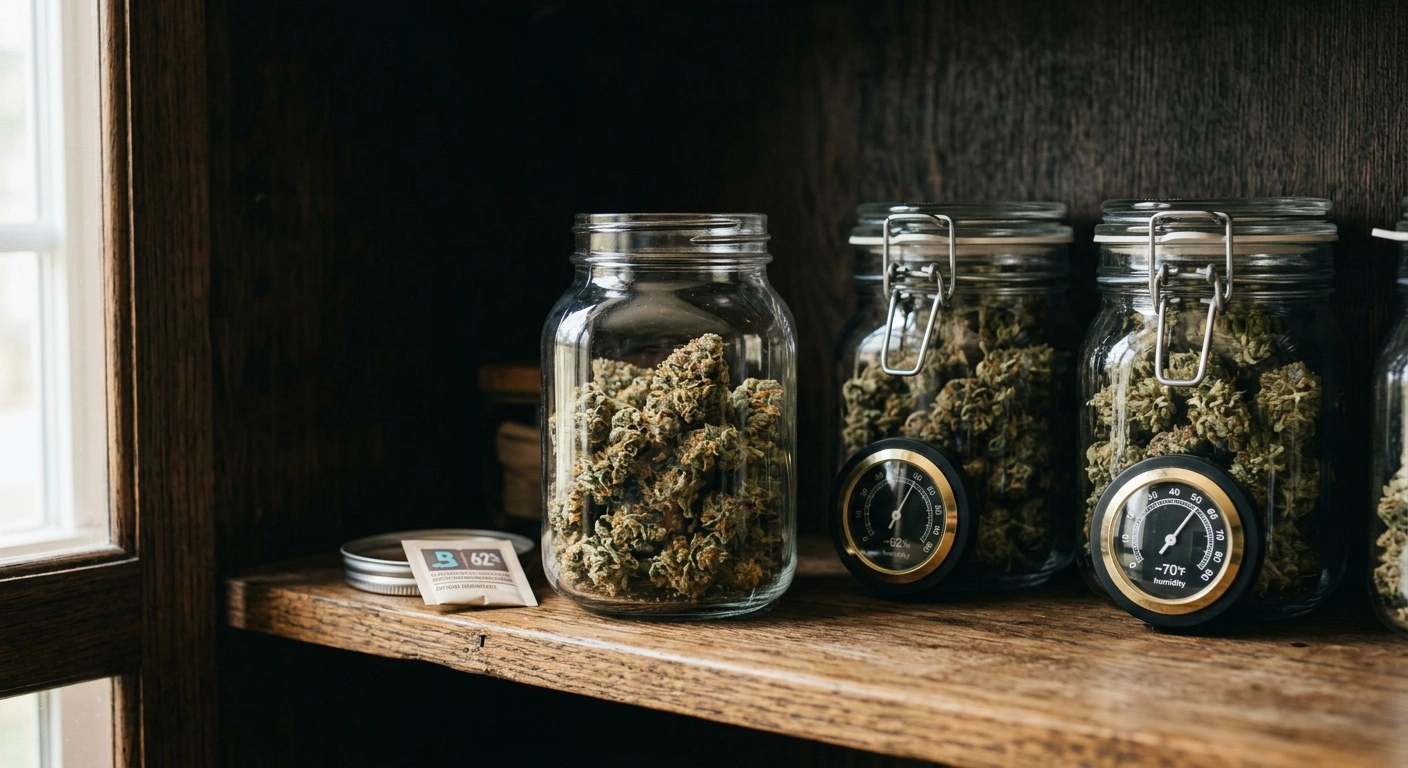
Cannabis curing containers help legal home growers preserve aroma, texture, and usable quality after drying. Laws vary by jurisdiction, including plant limits, locked-space rules, landlord restrictions, and harvest-processing requirements. Check your state cannabis regulator and local ordinances before growing, curing, or storing cannabis at home.
For most small harvests, airtight glass jars offer the best balance of visibility, cleanliness, and moisture control. Larger legal harvests may suit food-grade stainless steel vessels, gasketed buckets, or purpose-made curing bags. Always confirm that the material is clean, odor-free, and safe for direct food contact.
No container can rescue flower sealed while wet. Damp buds can support mold growth after the grower closes the lid. During cultivation and drying, keep wiring within rated loads, control heat from grow lights, and maintain adequate ventilation.
Why the Curing Container Matters
Curing starts after the flower has dried enough to enter a closed container without causing a sustained humidity spike. Inside the container, moisture moves gradually from the center of each flower toward its surface. A reliable seal lets the grower monitor this process instead of letting the flower dry continuously in room air.
Excess moisture encourages mold and microbial growth. Too little moisture can leave buds brittle and reduce aromatic quality. Temperature, airflow, humidity, and light still affect the harvest after drying.
General guidance often places the curing range near 58% to 62% relative humidity. However, readings vary with sensor accuracy, room temperature, flower density, and hygrometer placement. Warm conditions increase degradation and microbial risk, while direct light damages cannabinoids and aroma compounds.
Curing does not increase THC. Careful handling helps preserve what the plant produced while limiting losses from mold, oxidation, heat, and light.
Comparing Cannabis Curing Containers
The right vessel depends on harvest size, storage space, breakage risk, and the need to inspect separate batches. Glass remains the practical benchmark for small harvests. However, it becomes heavy and awkward when a grower needs many jars.
Stainless steel offers durability and blocks light, but growers must open it to inspect the contents. Food-grade buckets provide inexpensive capacity, though seal quality varies. Previously used plastic may also retain odors.
Purpose-made curing bags reduce weight and eliminate the risk of broken glass. Follow the manufacturer’s directions and inspect each closure before use. Ordinary kitchen bags and vacuum bags make poor substitutes because they may exchange odors or compress delicate trichomes.
| Container type | Best use | Main advantages | Main drawbacks |
|---|---|---|---|
| Airtight glass jars | Small home harvests and separate cultivars | Nonporous, easy to clean, visible contents, and room for a small hygrometer | Breakable, heavy, admits light, and inefficient for large batches |
| Purpose-made glass curing vessels | Growers who want wide openings or integrated monitoring | Convenient access, reusable construction, and features designed for flower storage | Higher cost than standard jars; seals and built-in meters still need testing |
| Food-grade stainless steel containers | Medium or larger legal harvests | Durable, nonporous, light-blocking, and easy to sanitize | Hidden contents, variable seal quality, and rapid warming in hot rooms |
| Food-safe buckets with gasket lids | Budget-conscious bulk curing | High capacity, stackable design, low weight, and wide availability | Limited visibility, variable seals, and scratches that can trap residue |
| Purpose-made curing bags | Space-saving storage and larger batches | Light, compact, and free from glass-breakage risk | Possible punctures or closure failures; performance varies by material |
Best Containers by Harvest Size and Use
Choose container capacity according to batch size rather than using the fewest possible vessels. Several smaller containers can isolate a moisture problem before it affects the whole harvest. They also keep different cultivars, harvest dates, and drying rates separate.
Do not pack flower tightly. Compression makes inspection difficult and limits gentle movement inside the vessel. In contrast, a small amount of flower in a large container creates unnecessary headspace and less representative humidity readings.
Leave enough room to shift the flower gently without crushing it. Label each batch according to household and state requirements. Avoid labels or packaging that could attract children.
Small Harvests: Airtight Glass Jars
Wide-mouth glass canning jars suit most small, legal home harvests. They provide good visibility, simple cleaning, and low replacement costs. The wide opening also reduces scraping when removing flower.
A sound lid and gasket should hold a stable environment between checks. Clear glass makes condensation and visible fungal growth easier to spot. Keep the jars in a dark cabinet because clear glass admits room and window light.
Use several jars instead of forcing the crop into one oversized container. Dividing the harvest limits how much flower each check exposes to room air. It also prevents one damp section from affecting every bud.
Replace any lid or gasket that shows corrosion, cracks, warping, or seal failure. Test closures before filling the jars.
Medium Harvests: Stainless Steel or Multiple Jars
A medium harvest can still fit into several glass jars, especially when careful batch control matters most. Food-grade stainless steel offers an alternative when weight, breakage, or light exposure creates problems.
Choose a vessel with a removable, washable gasket and a consistent closure. The lid should seal without pressing heavily on the flower. Because steel hides the contents, follow a regular inspection schedule.
Large vessels can conceal wet pockets when branches dry at different rates. Do not combine batches that feel noticeably different in texture. Wetter material can raise humidity throughout the container.
Keep questionable flower separate. If it still feels damp, continue controlled drying before starting the cure.
Large Legal Harvests: Food-Safe Buckets or Curing Bags
For larger home harvests allowed under state law, gasketed food-safe buckets provide useful capacity. They weigh less than multiple glass jars and do not break. Choose new containers or ones that you can clean thoroughly.
Never use a bucket that previously held chemicals, cleaners, or strongly scented food. Deep containers also require more than a top-layer check. Inspect flower from several areas because one reading may not represent the whole batch.
Purpose-made curing bags offer another space-saving option when their seams and closures remain intact. Manufacturers design these bags differently from ordinary household plastic bags. Do not treat generic zipper bags as equivalent.
Avoid tightly vacuum-sealing flower during the cure. Strong compression can deform buds, remove trichomes, and hide uneven moisture.
Long-Term Storage: Small, Airtight, Light-Protected Batches
After active curing, focus on limiting heat, light, air exchange, and handling. Several small glass or stainless vessels work better than one container opened repeatedly. Separate portions protect unused flower from room air and oxygen exposure.
Store containers in a cool, dark, stable location. Avoid windowsills, vehicles, attics, and humid basements. Keep all cannabis locked away from children and pets.
Refrigerators can cause condensation when cold containers meet warm air. Household freezers can make trichomes brittle. A humidity-control pack may maintain an already stable batch, but it cannot correct poor drying or active mold.
Supplies for Curing and Monitoring
A practical setup requires clean materials and a reliable way to track conditions. Choose enough containers to prevent compression and separate batches with different drying histories. Small digital hygrometers can reveal trends, although low-cost sensors often disagree.
Compare hygrometers with one another before use. A room thermometer and hygrometer also help because dry or humid room air affects each open container.
Clean tools reduce unnecessary contact with the flower. Written records make gradual changes easier to spot. Do not rely on smell alone, since normal cannabis aroma does not prove that a batch is safe.
- Airtight, food-safe containers sized for the harvest
- Clean lids, gaskets, or closures without cracks, rust, punctures, or retained odors
- Small hygrometers that fit without compressing the flower
- A separate room thermometer and hygrometer
- Clean, dry gloves or sanitized handling tools
- Labels or a log for cultivar, harvest date, drying start, and container checks
- A dark, temperature-stable, locked storage area
- Optional humidity-control packs for properly dried, stable flower
How to Cure Cannabis in a Container
Do not move cannabis directly from harvest into a sealed vessel. First, dry it in a clean, dark, ventilated space with controlled temperature and relative humidity. General drying guidance often centers near 60°F and 60% relative humidity.
The proper pace depends on flower size, plant structure, equipment, and local climate. Do not aim strong airflow directly at the buds. Rapid surface drying can trap moisture inside and reduce aromatic quality.
A gradual, even dry should come before controlled moisture redistribution in the container. Look for stable conditions without condensation, musty odors, or visible fungal growth.
- Finish drying before sealing. Put only surface-dry flower into the container. It should not feel wet or spongy. Small stems may bend or begin to snap instead of folding limply. Cue: A test container does not fog or show a sustained jump into a damp range.
- Inspect and divide the batch. Examine the buds under good light. Discard material with fuzzy growth, unusual powder, suspicious discoloration, or a musty odor. Separate dense flowers from smaller pieces because they may retain different amounts of moisture. Cue: Each vessel contains flower with a similar size, texture, and drying history.
- Fill without compressing. Place flower loosely in the vessel and leave room for gentle movement. Never press buds down to create more capacity. Cue: The flower shifts when you slowly tilt the container.
- Add a hygrometer and close the lid. Place the sensor where you can read it without burying it under dense flower. Give the closed environment time to stabilize before reacting to one reading. Cue: Relative humidity settles near 58% to 62% without condensation.
- Vent deliberately during the early cure. Open the container in a clean, suitably dry room if humidity climbs or the flower feels damp. Return persistently damp material to controlled drying instead of repeatedly opening a wet jar. Cue: Humidity stabilizes after closing, and the flower feels resilient rather than wet.
- Rotate and inspect gently. Slowly move the vessel or use clean tools to examine the flower. Check for clumping, wet pockets, pests, and fungal growth. Avoid vigorous shaking because it can dislodge trichomes. Cue: Buds remain separate and show consistent conditions throughout the batch.
- Open less often as conditions stabilize. Frequent air exchange stops helping once humidity remains steady. Repeated opening exposes the flower to oxygen and changing room humidity. Cue: Readings stay consistent between checks without musty odors or texture changes.
- Move the batch into protected storage. Keep sealed vessels in a cool, dark, locked location. Open only the portion you plan to use. Cue: The flower keeps a stable texture and characteristic aroma without condensation, bleaching, or visible growth.
Troubleshooting Common Curing Problems
Most curing problems start with flower that entered the vessel too wet. Failed seals and unstable room conditions can also cause trouble. Use hygrometer readings alongside touch, appearance, and odor.
A reading near the top of a large vessel may miss a wetter pocket below. Inspect several areas instead of trusting one sensor location.
Do not smoke, vape, or consume cannabis that shows visible mold or smells musty. Removing the visible portion does not make the remaining flower safe. Home methods cannot reliably sterilize moldy cannabis.
People with weakened immune systems or respiratory conditions face added risks. They should discuss cannabis exposure with a healthcare professional.
Problem: Mold or a Musty Smell
Cause: The grower sealed flower with excess internal moisture or mixed unevenly dried batches. Warm storage and tight packing can also conceal wet areas. Warning signs include webbing, fuzzy growth, unusual powder, discoloration, and basement-like odors.
Fix: Isolate the vessel immediately and do not consume the suspect material. Clean and sanitize reusable equipment according to the manufacturer’s instructions. Keep that equipment away from unaffected batches until cleaning is complete.
Before curing another batch, review drying conditions, fill level, sensor placement, and inspection methods. Never expect a humidity pack to make wet cannabis safe. If you cannot rule out contamination, discard the affected material.
Problem: Brittle, Over-Dried Flower
Cause: Excess heat, low room humidity, direct fan airflow, a leaking seal, or frequent opening can strip moisture too quickly. Over-dried flower may crumble during handling and lose aroma faster. Texture alone does not indicate cannabinoid content.
Fix: Transfer the flower to a sound airtight vessel and limit further air exposure. A storage pack designed for cannabis may gradually improve texture. It cannot restore aroma compounds already lost through evaporation or degradation.
Do not add fruit peels, bread, lettuce, damp paper, or other household materials. These methods introduce uncontrolled moisture, odors, and microbes. Check the lid and gasket before blaming the room alone.
Problem: Hay or Fresh-Cut-Grass Smell
Cause: The flower may have dried too quickly on the outside or entered the vessel too soon. It may also need more time for its aroma to stabilize. Plant quality, harvest timing, and drying conditions can produce grassy notes as well.
Fix: Confirm stable humidity and inspect for mold. Return damp flower to controlled drying rather than leaving it sealed. If conditions remain safe, continue curing with measured ventilation.
Aroma may become more defined over time. However, curing cannot create terpenes or reverse damage caused by heat and rapid drying. Treat any change from grassy to musty as a contamination warning.
Problem: Pests in the Container
Cause: Insects, eggs, or contaminated plant debris may enter from the grow or drying area. Dirty storage equipment can also introduce pests. A sealed jar does not kill insects hidden inside dense flowers.
Fix: Isolate the batch to prevent pests from reaching other cannabis or living plants. Inspect nearby vessels, shelves, drying equipment, and the cultivation area.
Never apply household pesticides directly to cured flower. States set specific pesticide rules for cannabis, and inhaled residues can create serious risks. If contamination is extensive or uncertain, follow local requirements for disposal.
Cleaning, Monitoring, and Safe Storage
Wash reusable glass and stainless steel according to the manufacturer’s directions. Rinse each piece thoroughly and let it dry completely. Pay close attention to gaskets and lid channels, where moisture can remain hidden.
Check plastic buckets and bags for scratches, punctures, clouding, retained odors, and closure damage. Replace any item that you cannot clean or seal reliably. Compare hygrometer readings periodically because sensors can drift over time.
Keep all cannabis locked and out of reach of children and pets. Avoid decorative vessels or familiar food containers that could cause accidental ingestion. Use clear, adult-oriented labels that meet local rules without appealing to children.
Driving while impaired remains illegal everywhere. Employers may also test for cannabis and act under applicable laws and workplace policies.
Federal law restricts marijuana, including transport across state lines between states with legal cannabis programs. Cannabis also remains illegal on federal land. Federal firearm restrictions may apply to cannabis users, including registered medical patients, although courts continue to review related issues.
For accidental ingestion, call Poison Control at 1-800-222-1222. Call 911 if the person develops severe symptoms.
Choosing a Container You Can Manage Consistently
The best setup keeps each legal harvest clean, separate, observable, and protected from heat and light. Glass jars remain the most practical cannabis curing containers for small batches. Stainless steel vessels, food-safe buckets, and purpose-made bags can simplify larger legal harvests.
Material alone does not determine performance. Seal quality, cleanliness, fill level, room conditions, and regular inspection all affect the cure.
Buy enough vessels to prevent compression and separate flower that dried at different rates. Test every closure before harvest instead of discovering a failed gasket after filling. Treat the hygrometer as a monitoring tool, not a substitute for proper drying and direct inspection.
Home-cultivation, possession, processing, and storage rules vary by state and locality. Consult your state cannabis regulator and applicable local laws before growing, curing, or storing a harvest. This article provides general information, not legal advice.