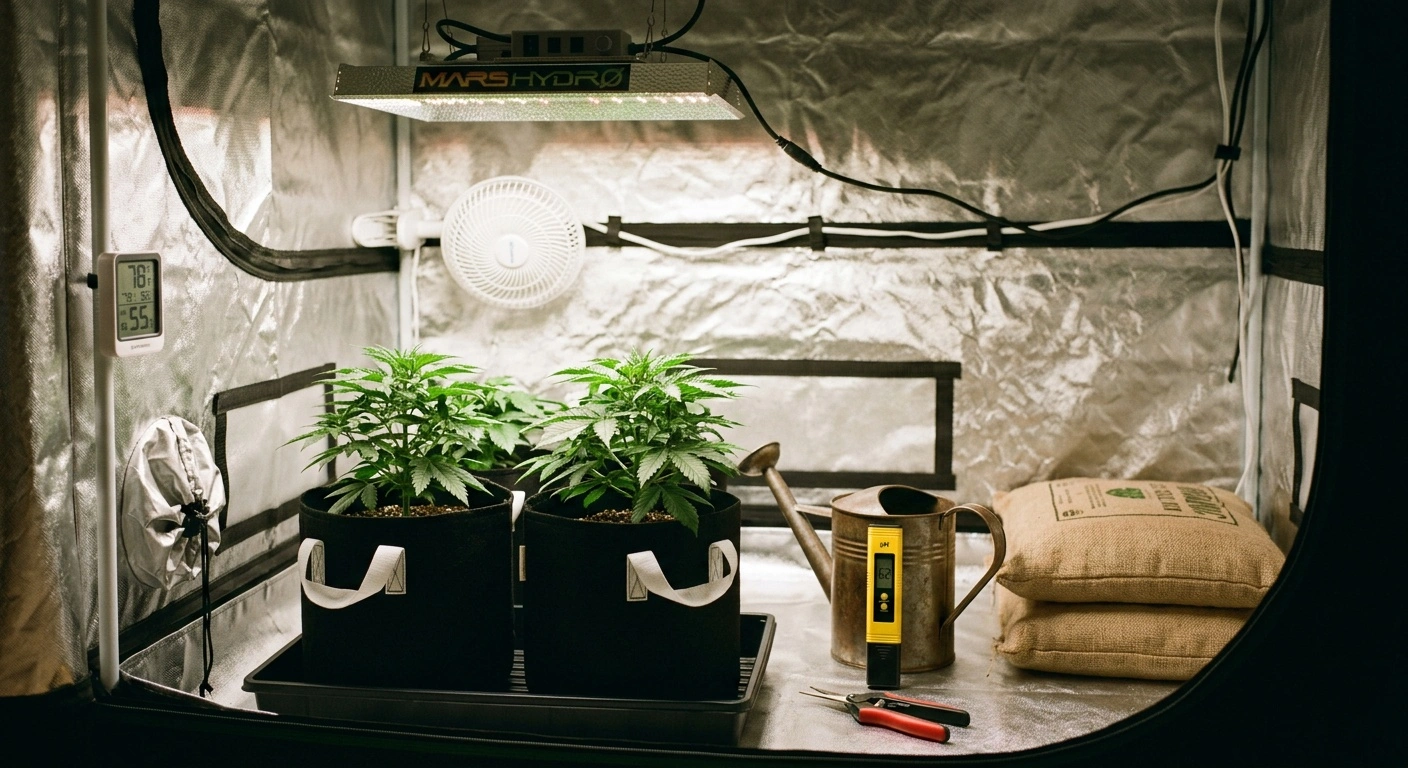
Cannabis growing supplies determine how well you can manage light, water, airflow, and plant health. The right equipment also reduces daily guesswork and helps prevent common problems. Before buying anything, confirm that home cultivation is legal in your area.
Essential Cannabis Growing Supplies
Start with the equipment that controls the growing environment. Indoor plants depend on consistent lighting, ventilation, temperature, and humidity. Outdoor growers need fewer controls, but they still benefit from quality containers, soil, and monitoring tools.
Grow Lights
LED fixtures suit most home gardens because they use less electricity and produce less heat than older HID systems. Check the actual power draw, coverage area, and hanging distance before choosing a light. Manufacturer claims can vary, so compare independent output maps when available.
Use a timer to maintain a consistent light schedule. Choose one rated for the fixture’s electrical load, and never overload an outlet or extension cord.
Grow Tents and Reflective Spaces
A grow tent contains light and gives you more control over temperature and humidity. It also provides mounting points for lights, fans, and filters. Select a tent that leaves enough vertical space for containers, mature plants, and safe clearance above the canopy.
Check the frame strength before hanging heavy equipment. Support lights and filters with rated hangers rather than plastic clips or improvised hardware.
Ventilation and Air Movement
An inline exhaust fan removes warm, humid air from an enclosed growing space. A matching carbon filter can reduce odor, while ducting directs exhaust toward a suitable outlet. Size the fan for the room or tent volume and account for resistance from filters and duct bends.
Inside the space, oscillating fans keep air moving around the foliage. Use a gentle setting and avoid directing strong airflow at one spot for long periods.
Containers, Growing Media, and Drainage
Containers need enough drainage to keep roots supplied with oxygen. Fabric pots drain well and allow air to reach the root zone, though they may require more frequent watering. Plastic nursery pots retain moisture longer and cost less.
Choose a growing medium that matches your experience and routine. Soil mixes offer some buffering against feeding mistakes. Coco coir gives growers tighter control, but it requires regular nutrient management and pH checks.
Trays and Water Protection
Place trays or saucers under every container. They protect floors and make runoff easier to collect. For larger gardens, a raised drainage table can save time and prevent standing water.
Clean spills promptly. Water near electrical equipment creates a serious hazard, so keep plugs, power strips, and controllers above floor level.
Nutrients, Watering Tools, and Meters
Reliable cannabis growing supplies should include measured watering tools rather than an assortment of unmarked containers. A graduated jug, small watering can, and clean mixing bucket cover most home setups. Larger systems may benefit from a reservoir and pump.
Plants need appropriate levels of nitrogen, phosphorus, potassium, and micronutrients. Follow the nutrient maker’s starting rate, then adjust based on plant response. More fertilizer does not guarantee faster growth and can damage roots.
pH and Conductivity Testing
A digital pH meter helps you keep water and nutrient solutions within a usable range. Calibrate it regularly with fresh reference solution. Store the probe according to the manufacturer’s instructions.
An electrical conductivity meter measures dissolved salts in a nutrient solution. It helps growers track feeding strength and identify salt buildup. Beginners using amended soil may not need one immediately, but hydroponic growers usually will.
Water Quality
Check your source water before adding filters or treatment systems. A basic report can reveal mineral levels, disinfectants, and pH. In many homes, tap water works without major changes.
Reverse-osmosis systems remove many dissolved minerals, but they also waste water and require maintenance. Buy one only if testing shows that your water needs treatment.
Environmental Monitoring and Control
A thermometer and hygrometer provide the minimum data needed for an indoor garden. Models that record daily highs and lows reveal changes that occur while you are away. Place the sensor near canopy height and out of direct light.
A humidifier or dehumidifier may help in climates with persistent moisture problems. Select equipment according to room size, drainage needs, and operating cost. Controllers can automate these devices, but their sensors still need regular checks.
Inspecting Plants
A small magnifier makes pest inspections easier. Check leaf undersides, stems, and the surface of the growing medium on a regular schedule. Early detection usually limits damage and reduces the need for stronger treatments.
Keep pruning shears clean and sharp. Wipe the blades between plants to reduce the spread of pathogens. Nitrile gloves also help keep plant residue off your hands and tools.
How to Choose Cannabis Growing Supplies
Build your setup around the available space, electrical capacity, and time you can spend on maintenance. Measure the area before ordering tents, trays, lights, or ventilation equipment. Confirm that every electrical device carries an appropriate safety certification.
Buy dependable core equipment first. Lights, ventilation, meters, and safe electrical hardware affect the garden every day. Decorative accessories and complex automation can wait until you understand what the space needs.
Plan for Replacement Parts
Keep spare timer batteries, fan clips, irrigation fittings, and meter calibration solution on hand. These inexpensive items can prevent a minor failure from disrupting the garden. Record model numbers for filters, lamps, pumps, and controllers.
Review return policies and warranty terms before buying high-cost equipment. Local garden shops may provide faster support, while online sellers often carry a wider selection. Compare total cost, including shipping and replacement parts.
Build a Safe, Practical Growing Setup
Choose cannabis growing supplies that solve a specific problem in your space. Start with light, airflow, drainage, and accurate measurements, then add equipment as conditions require. A simple setup that you can inspect and maintain will outperform a complicated system you cannot manage.
Clean the growing area between cycles and test equipment before relying on it. Consistent maintenance protects plants, reduces waste, and extends the life of your tools.