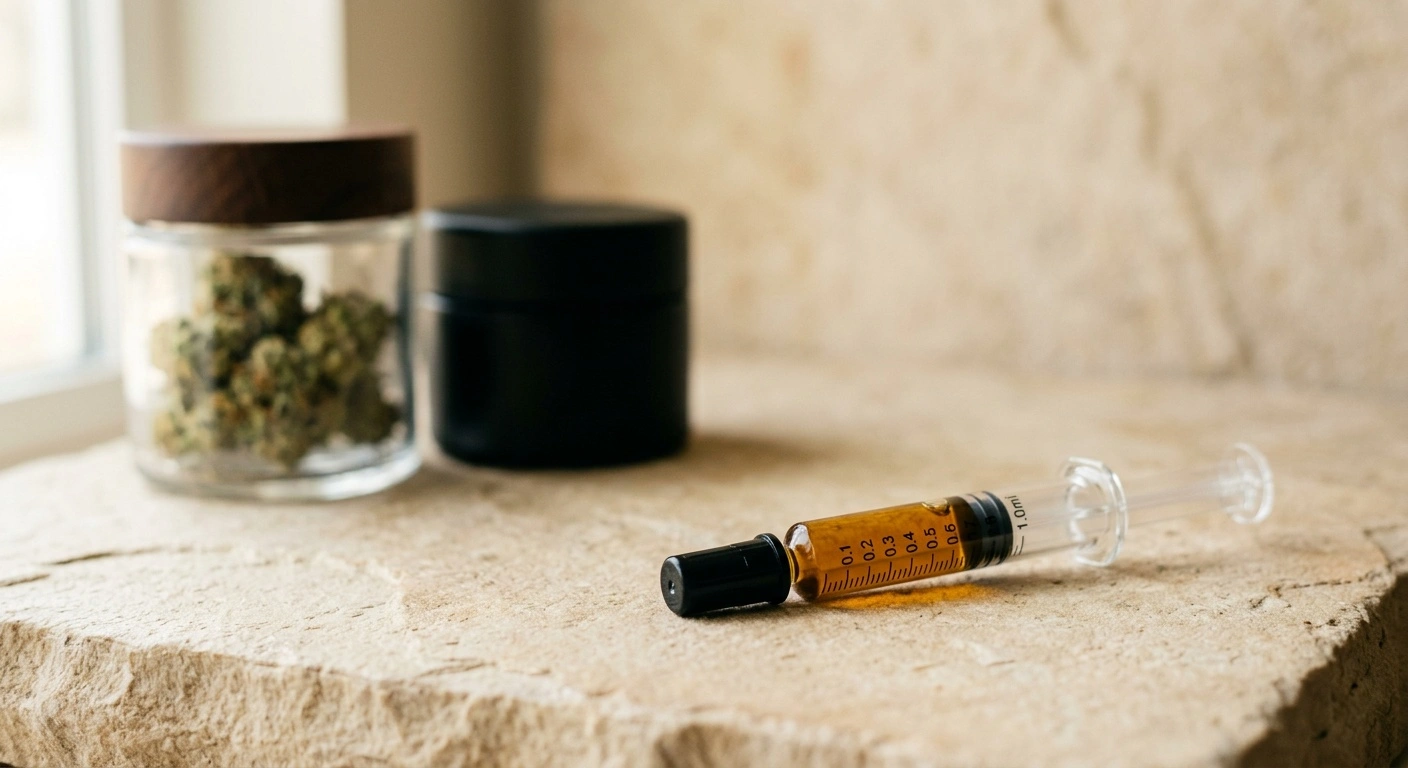
A cannabis oil syringe is a needle-free applicator that dispenses measured amounts of concentrated cannabis oil. It gives adults more control than a dropper or pre-portioned edible. Despite its appearance, you must never use the applicator to inject oil into the body.
The correct method depends on the product inside. Manufacturers may formulate oils for swallowing, sublingual use, vaporization, topical application, or another specific purpose. Read the package and follow local serving guidance before use. Ask a pharmacist, healthcare provider, or licensed dispensary employee if the intended route remains unclear.
What Is in a Cannabis Oil Syringe?
The applicator usually contains a thick cannabis extract inside a plastic or glass barrel. A cap covers the tip, while graduated markings show volume. The package may describe the extract as distillate, full-spectrum oil, activated oil, high-THC oil, or CBD-rich oil. These terms do not determine how you should use the product.
“Activated” generally means that heat converted cannabinoid acids into compounds such as THC or CBD during processing. The manufacturer may approve an activated product for ingestion, but consumers should still check the directions. Raw concentrates may contain more cannabinoid acids, including THCA, and may require a different application.
Full-spectrum products retain a broader range of cannabis compounds. Distillates undergo more refining and usually contain a narrower cannabinoid range. However, neither description confirms that a product is safe to swallow, inhale, or apply to skin.
Concentrates can contain much more THC than cannabis flower. Even a small portion may deliver a substantial amount. Syringe markings show volume, not a universal cannabinoid dose. Check the label and matching laboratory report for the stated THC, CBD, and other cannabinoid content.
Read the Cannabis Oil Syringe Label First
Confirm the product name, cannabinoid content, ingredients, intended application, expiration date, and storage instructions. Look for directions that specify oral, sublingual, inhaled, topical, or another approved use. Do not improvise if the package omits this information.
Check whether the package reports cannabinoid content per serving, per unit of volume, or for the full container. These measurements mean different things. Confusing them could lead to more THC than intended. Follow the manufacturer’s directions and any serving standard required in the state of sale.
Products from regulated dispensaries should include information that connects them to required testing. Request the certificate of analysis, commonly called a COA, when available. The batch or lot number on the COA should match the package. Testing requirements vary by state, so an unsupported “lab tested” claim offers limited assurance.
Review the ingredient list for carrier oils, flavorings, botanical terpenes, and other additives. People with allergies or dietary restrictions should not assume an extract contains only cannabis. Stop and contact the retailer or manufacturer if the label conflicts with the COA.
Common Uses for Cannabis Oil Applicators
The package determines the appropriate application. The applicator’s shape does not. This comparison provides general guidance, but the product directions take priority.
| Application | What to confirm | General onset | Primary concern |
|---|---|---|---|
| Swallowed | The manufacturer approves oral or edible use | Delayed and often much slower than inhalation | Taking more before the first serving takes effect |
| Held under the tongue | The manufacturer approves sublingual or oromucosal use | Often faster than swallowing, but variable | Assuming every thick concentrate absorbs well this way |
| Vaporized | The extract supports inhalation and works with the device | Usually within minutes | Using incompatible oil, hardware, or additives |
| Applied to skin | The product directions specifically approve topical use | Variable and generally localized | Applying unsuitable concentrate to broken or irritated skin |
Swallowing Oral Cannabis Oil
If the manufacturer approves oral use, you may dispense the oil onto food or into a food-grade capsule. Follow any other method listed on the package. Using a small amount of food can help you confirm that you consumed the full portion.
Keep the applicator tip out of your mouth. Direct contact can contaminate the remaining oil or release more than intended.
The digestive system and liver process swallowed THC. As a result, the effects may feel stronger and last longer than those from inhaled cannabis. Food intake, metabolism, formulation, and tolerance can all change the onset. Do not take more simply because you feel no immediate effect.
Holding Cannabis Oil Under the Tongue
Some manufacturers formulate cannabis oils for placement under the tongue or against other oral tissue. These products may start working sooner than swallowed oil. However, people usually swallow some oil, which can produce a later edible-like effect.
Only use this method when the label supports it. Thick texture alone does not make a concentrate suitable for sublingual absorption. Keep the tip away from your mouth, and never share an applicator.
Consult a healthcare provider before using cannabis for a medical condition. This step matters especially if you take prescription medication or manage a chronic illness.
Vaporizing Oil
Some dispensaries sell concentrates in applicators for filling compatible vaporization hardware. Only inhale an extract when the package explicitly approves inhalation. The device manufacturer must also confirm compatibility.
Never place oral tinctures or carrier oils in a vape device. Incompatible oils, unregulated thinning agents, and homemade mixtures may create respiratory hazards. Do not modify a product to make it flow through unsuitable equipment.
Applying Cannabis Oil to Skin
Apply an extract to the skin only when the manufacturer approves topical use. Avoid broken or irritated skin unless the directions or a clinician specifically permit application there. Wash your hands afterward.
A topical product may contain ingredients that make it unsuitable for swallowing or inhalation. Likewise, an oral or inhaled concentrate may irritate the skin. Follow the approved route instead of repurposing the product.
How to Use the Applicator Safely
- Confirm the intended route. Match your planned use with the package directions. Contact the retailer or manufacturer if the route remains unclear.
- Inspect the applicator. Look for cracks, leaks, damaged markings, unusual separation, or contamination around the tip. Avoid products with uncertain seals or package integrity.
- Let thick oil reach room temperature. If the label permits, hold the closed applicator in your hands briefly. Never use a flame, stovetop, microwave, or other high-heat method.
- Remove the cap carefully. Point the tip away from your face, eyes, clothing, children, and pets. Keep the cap nearby so you can reseal the product promptly.
- Position the tip over the approved surface. This may include food, a food-grade capsule, or compatible equipment. Never insert the tip into skin or a blood vessel.
- Press the plunger slowly. Thick oil may continue moving after you release pressure. A controlled press reduces the chance of dispensing too much.
- Compare the amount with the label. Use the syringe lines only if the manufacturer explains their relationship to cannabinoid content. Air pockets and residue can reduce visual accuracy.
- Wipe and recap the tip. Follow the manufacturer’s cleaning directions. Do not introduce water or other substances into the applicator.
- Secure the product immediately. Return it to locked storage instead of leaving it on a counter or bedside table. Record the amount if your healthcare provider recommends a personal log.
Unless the manufacturer permits reuse, treat an empty applicator as single-use packaging. Follow local disposal rules for cannabis products and related containers.
Cannabis Oil Dosage Tips
Cannabis concentrates require caution because their size can disguise their potency. Follow the package directions and the serving standard for the state where you bought the product. Start low and go slow. Never copy another person’s portion because sensitivity and tolerance vary widely.
First, determine whether the label reports cannabinoids per serving or for the full container. Ask a pharmacist or licensed dispensary employee for help if the syringe lines do not match the stated servings. Avoid home calculations that rely on assumed oil density or a similar product found online.
Allow swallowed oil enough time to take effect before considering more. Ingested cannabis may take much longer to work than smoked or vaporized cannabis. Its effects can also continue for several hours. Taking another portion during the delay often causes unpleasant over-intoxication.
New consumers, older adults, and people sensitive to THC should use extra caution with concentrates. Medical patients should ask a healthcare provider to review the full label. A pharmacist can also check for interactions with prescriptions, over-the-counter medicines, and supplements.
Onset, Duration, and Impairment
Inhaled cannabis usually produces noticeable effects within minutes. Swallowed oil may take considerably longer. Sublingual products may act sooner than swallowed products, although onset still varies. Topicals generally produce localized effects, but formulation and absorption can differ.
Food intake, metabolism, prior cannabis exposure, product formulation, and THC content all influence the experience. The same labeled serving may feel different on separate occasions. High-potency products can also cause stronger and longer-lasting impairment than expected.
Plan for impairment to continue beyond the initial peak. Do not drive, cycle in traffic, operate machinery, handle firearms, or perform hazardous work after using intoxicating cannabis. Every state prohibits impaired driving, regardless of medical authorization or legal purchase.
Employers may test for cannabis and enforce workplace policies where the law permits. State legalization does not authorize marijuana transport across state lines. Federal property also follows federal cannabis restrictions. Check current rules with your state cannabis regulator and other relevant authorities.
How to Store a Cannabis Oil Syringe
Keep the product in its original child-resistant packaging whenever possible. Lock it away from children, pets, and visitors. Follow the manufacturer’s temperature instructions because refrigeration can make some oils difficult to dispense.
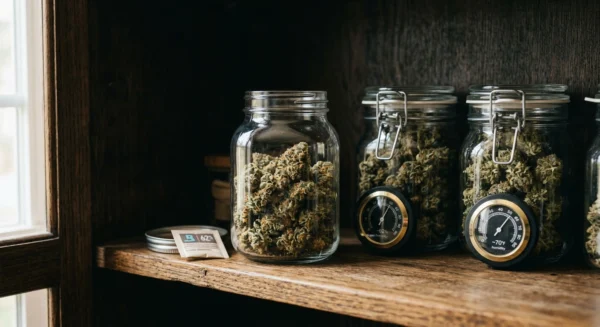
Heat, light, oxygen, and moisture can degrade cannabinoids or change the extract’s texture and taste. A cool, dark, dry cabinet often works when the label does not require refrigeration. Avoid hot vehicles, sunny windowsills, bathrooms, stoves, and heaters.
Keep the cap firmly attached. Store the applicator upright or in the position the manufacturer recommends. A clean secondary container can contain leaks, but it should remain labeled and secured. Never transfer oil into an unlabeled household syringe or food container.
Discard products with rancid odors, broken seals, unexplained contamination, or uncertain storage histories. Some formulations may separate or crystallize. Contact the manufacturer instead of assuming that these changes are normal. Follow local disposal instructions for both the oil and applicator.
Health and Safety Considerations
THC can cause anxiety, panic, confusion, dizziness, poor coordination, and a rapid heart rate. Concentrated products may increase these effects when someone takes too much. Higher-potency cannabis may also raise the risk of psychotic symptoms in susceptible people.
Frequent use can contribute to cannabis use disorder. Long-term heavy use also has links to cannabinoid hyperemesis syndrome, which causes recurring nausea and vomiting. Seek medical advice if cannabis use begins affecting daily responsibilities, relationships, or health.
Avoid cannabis during pregnancy and breastfeeding. People with heart conditions, severe anxiety, a history of psychosis, or other significant conditions should consult a healthcare provider. Ask a pharmacist to review possible medication interactions.
Federal firearm restrictions may apply to cannabis users, including registered medical patients. Courts continue to consider legal challenges, and the rules may change. Seek qualified legal advice about firearms, employment, housing, probation, immigration, or other high-stakes issues.
What to Do If Someone Uses Too Much
Move the person to a calm, safe place. Keep them away from vehicles, stairs, machinery, and other hazards. Do not combine cannabis with alcohol, sedatives, stimulants, or other drugs. Stay with anyone who appears confused or severely anxious.
Seek professional guidance instead of trying unproven home remedies. In the United States, call Poison Control at 1-800-222-1222 for accidental ingestion or other exposure concerns. This service can advise you about a child, adult, or pet.
Call 911 for trouble breathing, chest pain, seizures, loss of consciousness, extreme agitation, or difficulty waking the person. Keep the package and COA available. Responders can use that information to identify the ingredients and reported cannabinoid content.
Follow the Product Label for Safe Use
A cannabis oil syringe allows controlled dispensing, but it does not guarantee accurate dosing or universal use. Confirm the formulation, intended route, cannabinoid content, serving information, and storage requirements before opening the package. Account for the delayed onset of swallowed cannabis.
Buy from a legal, regulated source where available. Check that the COA matches the product’s batch or lot. Never inject the oil, place oral oil in a vape device, or use the product through an unapproved route.
Consult a qualified healthcare provider or pharmacist about medical use and medication interactions. Keep every cannabis product locked away from children and pets, and never drive while impaired. Laws vary by jurisdiction, so consult your state cannabis regulator for current requirements. This article provides general education, not medical or legal advice.